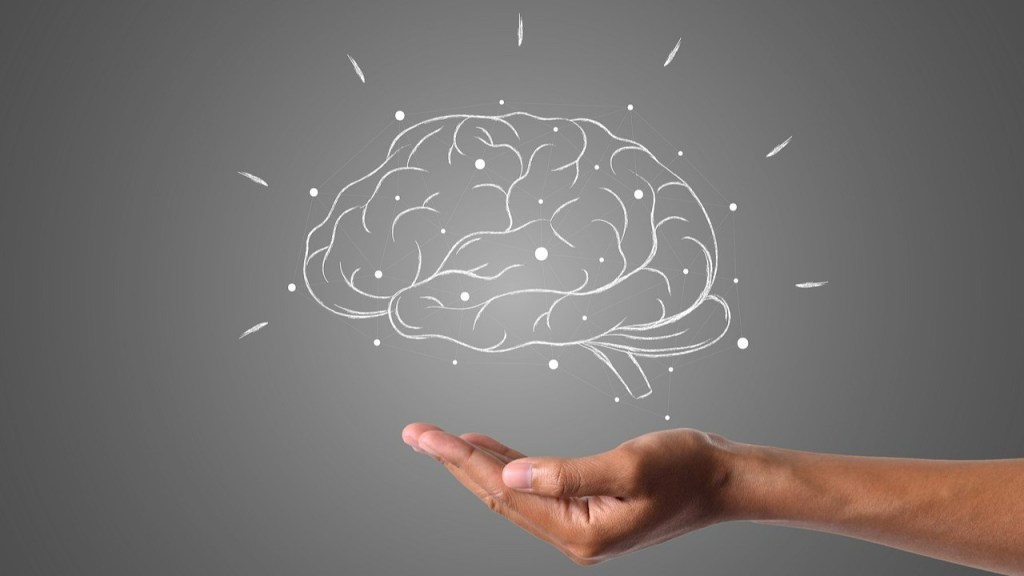
The common wisdom was that after childhood the brain changed only when it began the long process of decline; that when brain cells failed to develop properly, or were in-jured, or died, they could not be replaced. Nor could the brain ever alter its structure and find a new way to function if part of it was damaged.
The belief that the brain could not change had three major sources: the fact that brain-damaged patients could so rarely make full recoveries; our inability to observe the living brain’s microscopic activities; and the idea dating back to the beginnings of modern science-that the brain is like a glorious machine. And while machines do many extraordinary things, they don’t change and grow.
The balance system gives us our sense of orientation in space. Its sense organ, the vestibular apparatus, consists of three semicircular canals in the inner ear that tell us when we are upright and how gravity is affecting our bodies by detecting motion in three-dimensional space. One canal detects movement in the horizontal plane, another in the vertical plane, and another when we are moving forward or back-ward. The semicircular canals contain little hairs in a fluid bath. When we move our head, the fluid stirs the hairs, which send a signal to our brains telling us that we have increased our velocity in a particular di-rection. Each movement requires a corresponding adjustment of the rest of the body. If we move our heads forward, our brains tell an appropriate segment of our bodies to adjust, unconsciously, so that we can offset that change in our center of gravity and maintain our balance.
The signals from the vestibular apparatus go along a nerve to a specialized clump of neurons in our brain, called the “vestibular nuclei,” which process them, then send commands to our muscles to adjust themselves. A healthy vestibular apparatus also has a strong link to our visual system. When you run after a bus, with your head bouncing up and down as you race forward, you are able to keep that moving bus at the center of your gaze because your vestibular apparatus sends messages to your brain, telling it the speed and direction in which you are running. These signals allow your brain to rotate and adjust the position of your eyeballs to keep them directed at your target, the bus.
When we wish to move our bodies in space, we use spatial reasoning to construct an imaginary pathway in our heads before executing our movements. Spatial reasoning is important for a baby crawling, a dentist drilling a tooth, a hockey player planning his moves.
Spatial reasoning is also necessary for forming a mental map of where things are. We use this kind of reasoning to organize our desks or remember where we have left our keys.
Kinesthetic perception allows us to be aware of where our body or limbs are in space, enabling us to control and coordinate our movements. It also helps us recognize objects by touch.
When we speak, our brain converts a sequence of symbols–the letters and words of the thought into a sequence of movements made by our tongue and lip muscles. When we write a thought, our brain converts the words which are symbols–into movements of the fingers and hands.
Source : The Brain that Changes Itself: Stories of Personal Triumph from the Frontiers of Brain Science by Norman Doidge
Goodreads : https://www.goodreads.com/book/show/570172.The_Brain_that_Changes_Itself





 Thinking Beyond Science
Leave a comment