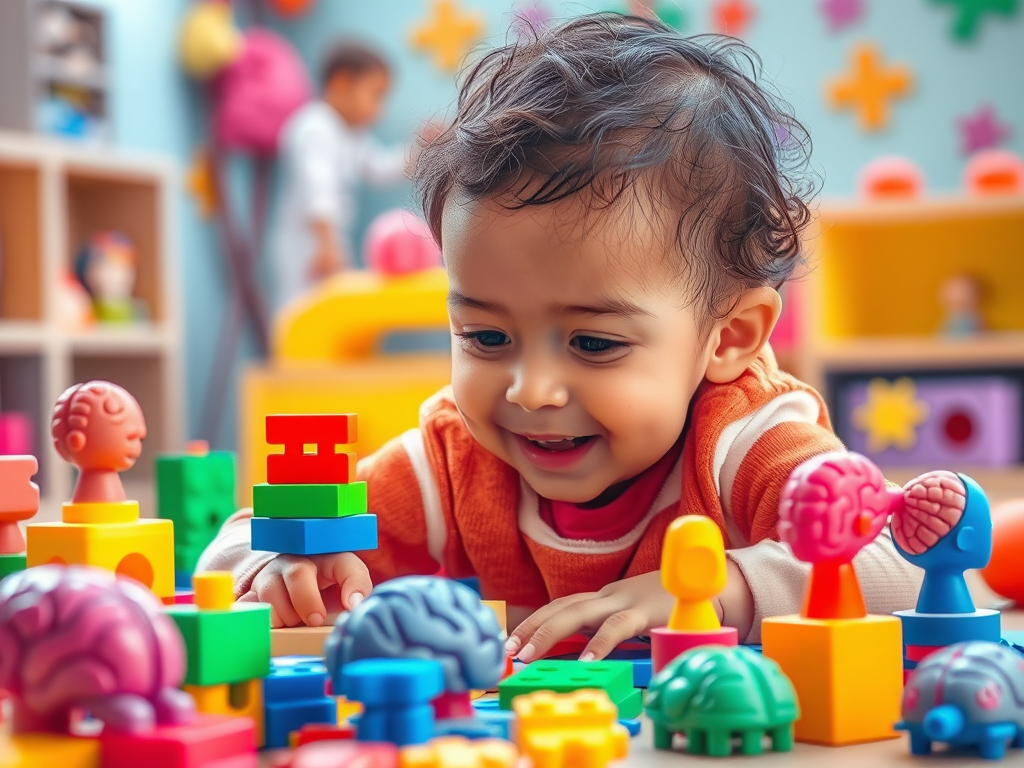
Parents are often experts about their children’s bodies. They know that a temperature above 98.6 degrees is a fever. They know to clean out a cut so it doesn’t get infected. They know which foods are most likely to leave their child wired before bedtime. But even the most caring, best-educated parents often lack basic information about their child’s brain. Isn’t this surprising?
Especially when we consider the central role the brain plays in virtually every aspect of a child’s life that parents care about: discipline, decision making, self-awareness, school, relationships, and so on. In fact, the brain pretty much determines who we are and what we do. And since the brain itself is significantly shaped by the experiences we offer as parents, knowing about the way the brain changes in response to our parenting can help us to nurture a stronger, more resilient child.
Most of us don’t think about the fact that our brain has many different parts with different jobs. For example, we have a left side of the brain that helps we think logically and organize thoughts into sentences, and a right side that helps we experience emotions and read nonverbal cues. We also have a “reptile brain” that allows us to act instinctually and make split-second survival decisions, and a “mammal brain” that leads us toward connection and relation-ships. One part of our brain is devoted to dealing with memory; another to making moral and ethical decisions. It’s almost as if our brain has multiple personalities— some rational, some irrational; some reflective, some reactive. No wonder we can seem like different people at different times!
The key to thriving is to help these parts work well together— to integrate them. Integration takes the distinct parts of our brain and helps them work together as a whole. It’s similar to what happens in the body, which has different organs to perform different jobs: the lungs breathe air, the heart pumps blood, the stomach digests food. For the body to be healthy, these organs all need to be integrated. In other words, they each need to do their individual job while also working together as a whole. Integration is simply that: linking different elements together to make a well-functioning whole. Just as with the healthy functioning of the body, our brain can’t perform at its best unless its different parts work together in a coordinated and balanced way. That’s what integration does: it coordinates and balances the separate regions of the brain that it links together. It’s easy to see when our kids aren’t integrated they become overwhelmed by their emotions, confused and chaotic. They can’t respond calmly and capably to the situation at hand. Tantrums, meltdowns, aggression, and most of the other challenging experiences of parenting and life are a result of a loss of integration, also known as dis-integration.
We want to help our children become better integrated so they can use their whole brain in a coordinated way. For example, we want them to be horizontally integrated, so that their left-brain logic can work well with their right-brain emotion. We also want them to be vertically integrated, so that the physically higher parts of their brain, which let them thoughtfully consider their actions, work well with the lower parts, which are more concerned with instinct, gut reactions, and survival.
The way integration actually takes place is fascinating, and it’s something that most people aren’t aware of. In recent years, scientists have developed brain-scanning technology that allows researchers to study the brain in ways that were never before possible. This new technology has confirmed much of what we previously believed about the brain. However, one of the surprises that has shaken the very foundations of neuroscience is the discovery that the brain is actually “plastic,” or moldable. This means that the brain physically changes throughout the course of our lives, not just in childhood, as we had previously assumed.
What molds our brain? Experience. Even into old age, our experiences actually change the physical structure of the brain. When we undergo an experience, our brain cells-called neurons—become active, or “fire.” The brain has one hundred billion neurons, each with an average of ten thousand connections to other neurons. The ways in which particular circuits in the brain are activated determines the nature of our mental activity, ranging from perceiving sights or sounds to more abstract thought and reasoning. When neurons fire together, they grow new connections between them. Over time, the connections that result from firing lead to “rewiring” in the brain. This is incredibly exciting news. It means that we aren’t held captive for the rest of our lives by the way our brain works at this moment—we can actually rewire it so that we can be healthier and happier. This is true not only for children and adolescents, but also for each of us across the life span.
Right now, your child’s brain is constantly being wired and rewired, and the experiences you provide will go a long way toward determining the structure of her brain. No pressure, right? Don’t worry, though. Nature has provided that the basic architecture of the brain will develop well given proper food, sleep, and stimulation. Genes, of course, play a large role in how people turn out, especially in terms of temperament. But findings from various areas in developmental psychology suggest that everything that happens to us— the music we hear, the people we love, the books we read, the kind of discipline we receive, the emotions we feel profoundly affects the way our brain develops. In other words, on top of our basic brain architecture and our inborn temperament, parents have much they can do to provide the kinds of experiences that will help develop a resilient, well-integrated brain.
For example, children whose parents talk with them about their experiences tend to have better access to the memories of those experiences. Parents who speak with their children about their feelings have children who develop emotional intelligence and can understand their own and other people’s feelings more fully. Shy children whose parents nurture a sense of courage by offering supportive explorations of the world tend to lose their behavioral inhibition, while those who are excessively protected or insensitively thrust into anxiety-provoking experiences without support tend to maintain their shyness.
Source : The Whole-Brain Child: Revolutionary Strategies to Nurture Your Child’s Developing Mind by Daniel J. Siegel, Tina Payne Bryson
Goodreads : https://www.goodreads.com/book/show/10353369-the-whole-brain-child
Read Next Article : https://thinkingbeyondscience.in/2025/05/23/enhancing-child-development-through-brain-integration/








 Thinking Beyond Science
Leave a comment