
THE MOST IMPORTANT and most often overlooked step in meditation is that of preparation. Without the appropriate preparation, physical, mental, or emotional distractions will create obstacles that prevent your meditation from becoming deep or profound. And while the physical body does not itself produce the meditative state or help you meditate, physical problems or discomforts can certainly create barriers or distractions in your meditation.
The most common physical problems are: illness; physical discomfort caused by tension or an inability to relax so that you can sit comfortably; fatigue or drowsiness; being physically agitated, jittery, or restless from the day’s stressful events; and problems with food-either being hungry or having eaten excessively. Most of these common physical barriers to meditation can be eliminated by becoming increasingly aware of how you manage your lifestyle. Of course it’s true that prevention is better than cure. While you can certainly continue to meditate if you have a cold or other minor physical problems, you will probably find that the dis-comfort, pain, or inability to concentrate that accompany any severe illness is a real obstacle to meditation. Fortunately, meditation tends to make you more sensitive to many physical processes, helping you prevent illness by becoming more attuned to what your body needs in order to stay well.
An advanced meditator can sit in meditation almost anywhere. For most of us, however, paying attention to some basic guidelines will greatly increase the ease of meditation. There are no special or unusual prerequisites for medita-tion-you can meditate at home, in the country, in the city, at the shore, or in the mountains. It does help, however, if the place you have chosen for meditation is relatively quiet, peaceful, uncluttered, and restful.
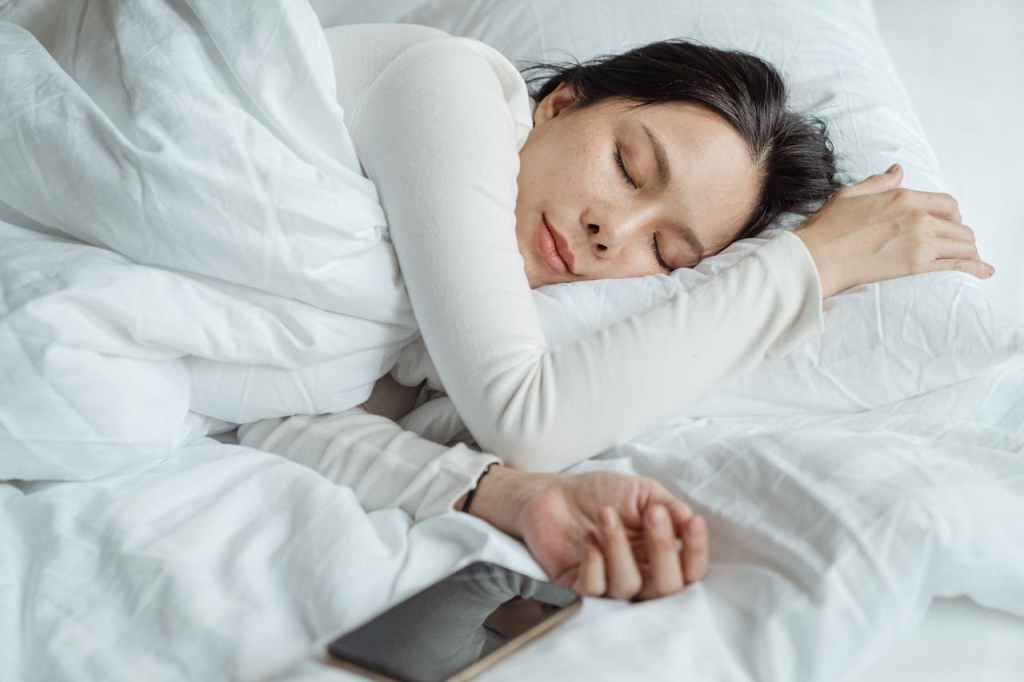
Ideally, a small corner of your room or home can be set aside as your meditation space. This should have good air circulation and not be stuffy, musty, or uncomfortable. A clean, quiet place is all you need. It is best if this space is apart from the main “busy-ness” of your life, away from the kitchen, television, or telephone, and not where others will interrupt you. Similarly, it may be wise to avoid a place like an office, which may have associations that distract you mentally. Choose a quiet, pleasant corner or area of a room. It is not recommended that you meditate on your bed because your mental associations with sleep may make it hard to stay alert and awake there. Whether you sit on a chair or on the floor as described in the next chapter, it helps to select a special place and reserve it for meditation.
Meditation can be done any time, night or day, but traditionally the best times-when the environment is most conducive to meditation-are said to be early morning and late evening, when the world around you begins to quiet down and you are not likely to be interrupted by others. You may be naturally freshest and more alert either in the morning or the evening, so that may be your own best time to meditate. However, your schedule and your personal responsibilities will also have a great impact on when you can meditate.
First step: Cleansing
First, prepare the body physically. Meditation is easiest when the body feels fresh, comfortable, relaxed, and clean. Taking a shower or even simply washing your face, hands, and feet will help to give you a fresher feeling. In the morning, your body will feel most comfortable meditating if you empty your bladder and bowels before you prepare for meditation.
Second step: Stretching
Some people find that their body feels stiff and achy after sleeping all night. In such cases a warm bath and gentle stretching exercises will help to prepare the body to sit in meditation.
Stretching and limbering the back and legs can significantly increase your comfort in meditation. Even a few minutes of stretching or yoga asanas can create a vast improvement in the quality of your meditative experience. Unlike strenuous aerobic exercise, these hatha yoga postures will not tire you or overly activate your body. Instead, they gently energize you, relax your muscles, help you let go of mental stress, and focus your concentration. In the beginning, consider spending at least 5 to 10 minutes stretching and preparing the body before meditation.
Third step: Relaxing
After you complete your stretching exercises you will find it beneficial to do a brief relaxation practice. Lie comfortably, with your back flat on the floor or on a padded sur-face. Use a thin cushion under your head. Cover your body with a sheet or thin shawl. Lie with your arms slightly separated from the body, palms turned up. Place your legs a comfortable distance apart. Make sure that your body weight is evenly distributed and that you are not twisting or leaning to either side. Your head should also be centered and not tilted in either direction, as this will create tension in the neck. This relaxation position is called the corpse posture, shavasana, because you are lying completely still and very relaxed. Let your eyes remain gently closed and take several minutes to become aware of your breath, exhaling and inhaling through your nostrils slowly and smoothly, without any interruptions or pauses.
Lying in this posture, you can lead yourself through a brief relaxation exercise, systematically paying attention to each major muscle group, moving progressively through your body. A complete description of this practice is given in the appendix. You may also be interested in using a guided relaxation tape. Relaxation practices should be brief, and should not last longer than about 10 minutes. You will need to ask your mind to remain alert, because for many people the tendency for the mind to drift off to sleep will become evident.
Fourth step: Calming the mind and nervous system
The breathing process is a powerful variable, which has an enormous impact on the tension level of your body, as well as on the calmness and clarity of your mind. Before meditation, special yogic breathing practices are done in a meditative sitting posture in order to help create a calm mental state conducive to an inward focus, concentration, and serenity.
Some people may initially feel a little resistant to spending time on these practices. However, once you have done them, you will notice that they aid immeasurably in deepening meditation. The breathing process and its role in emotional balance and mental clarity are fascinating.
Fifth step: Sitting in meditation
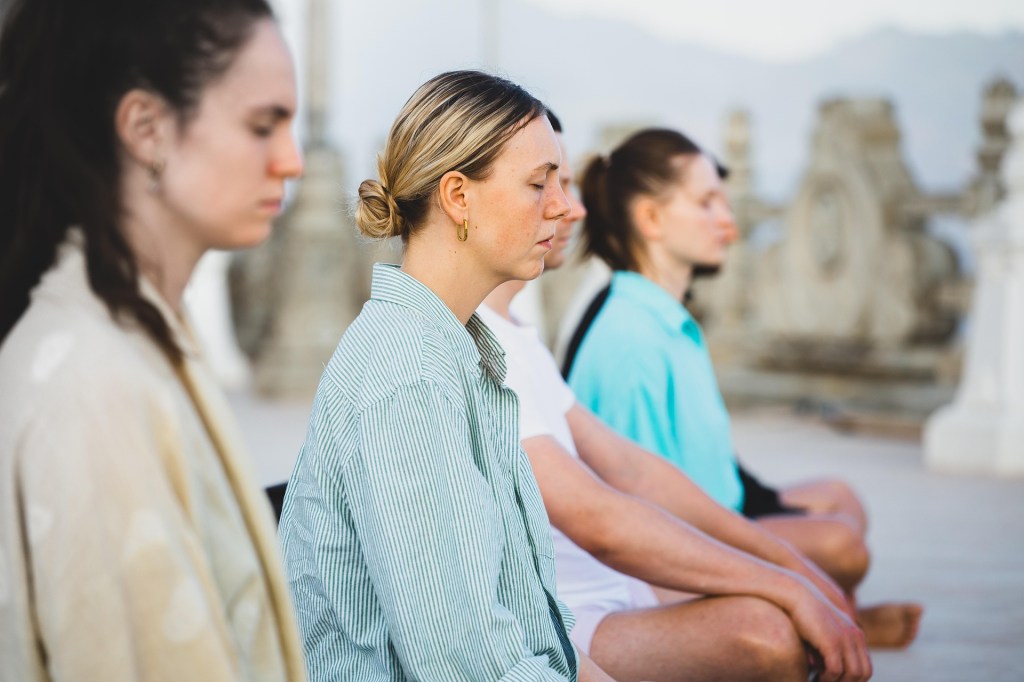
After you complete your breathing practice, you are ready to meditate. Sit in your meditative posture (a variety of such postures will be described in the next chapter) and simply allow your mind to become aware of your own mantra, or of the universal mantra so bum, a sound that is coordinated with the breath in a special way. As you exhale, mentally hear the sound hum; as you inhale, mentally hear the sound so.
Let your breath lengthen and become smooth. Sit quietly and allow your mind to focus on the mantra. Continue to sit comfortably in your meditation posture, letting your mind become quiet and centered. You may sit for as long as is comfortable or for whatever time you have available on that occasion. When you are ready to end your meditation, first bring your awareness back to the breath and then to the body. Make the transition from the state of internal awareness to external awareness a gradual one by gently covering your eyes with cupped hands and then opening your eyes to look first at the palms of your hands.
Thus, the order of practice is as follows: first, bathing or preparing; second, stretching exercises or yoga postures; third, relaxation exercise; fourth, breathing practices; and finally, meditation itself.
Source : Meditation and Its Practice by Swami Rama
Goodreads : https://www.goodreads.com/book/show/499994.Meditation_and_Its_Practice
Read the Next Article in the Series :



 Thinking Beyond Science
Leave a comment