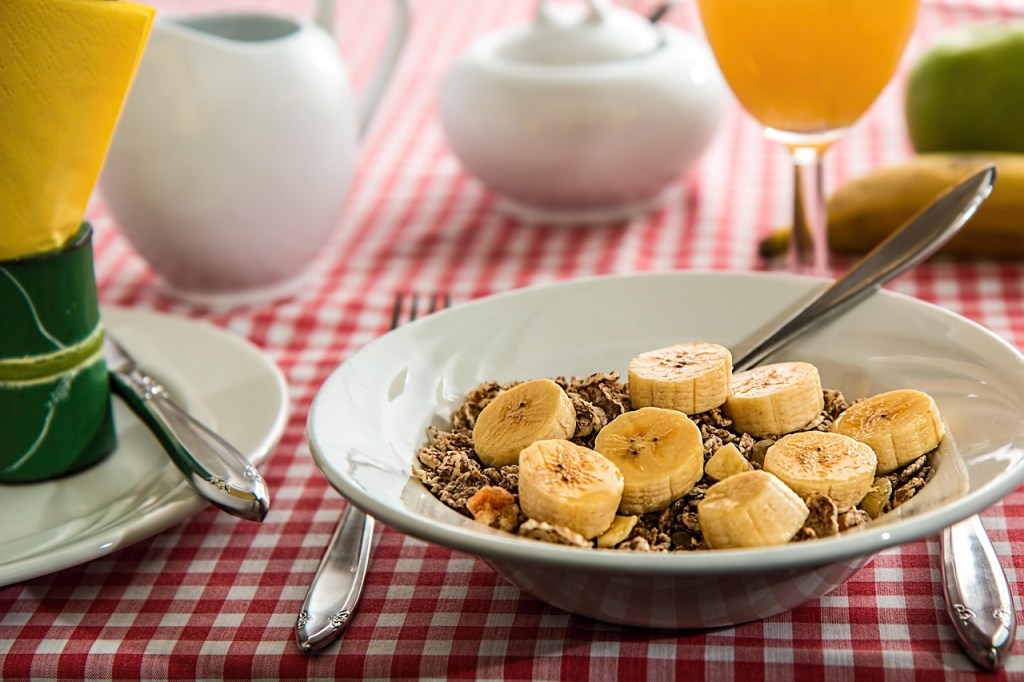
Glucose from fruit is ready to be used and does not need to be snapped. Sucrose does need to be snapped, and there’s an enzyme that separates it into glucose and fructose molecules, and this does not take long – it happens in a nanosecond.
Fructose is a little more complicated. After we eat it, a portion of it is turned back into glucose in our small intestine. The remainder of it stays in fructose form. Both permeate the lining of our gut to enter our bloodstream. I’ll explain what happens next later in this book, but what I want you to remember now is that although glucose is needed to fuel your body’s systems, fructose isn’t. We eat a lot of unnecessary fructose in our diet nowadays, because we eat a lot more sucrose (which, as a reminder, is half glucose, half fructose).
Enzymes work to snap the bonds of starch and sucrose, but there is no enzyme that can snap the bonds of fibre. It doesn’t get turned back into glucose. This is why when we eat fibre, it remains fibre. It travels from our stomach to our small and large intestines. And this is a good thing. Though it doesn’t turn back into glucose and therefore can’t provide energy to our cells, fibre is an essential part of our diet and plays a very important role in aiding digestion, maintaining healthy bowel movements, keeping our microbiome healthy and more.
Starch, fibre, fructose and sucrose are like four siblings with different personalities. They’re all related, because they have the same parent, glucose – no matter how much they argue about who borrowed whose clothes.
Members of the carbohydrate family exist in various proportions in a plant. For example, broccoli contains a lot of fibre and some starch, potatoes contain a lot of starch and some fibre, and peaches contain mostly sugars and some fibre.
When people talk about nutrition, they often say ‘carbohydrates’ or ‘carbs’ to describe only starch and sugars. They don’t include fire, because it isn’t absorbed into our bloodstream as its siblings are. You might hear something such as ‘Broccoli has few carbs but a lot of fibre. According to the scientific nomenclature, the correct thing to say would be Broccoli contains a lot of carbs, most of which are fibre.’
Because glucose is so important to our cells, if we can’t find any to eat, our body can make it from within. That’s right, we don’t photosynthesise and make glucose out of air, water and sunlight, but we can make glucose from the food we eat – from fat or protein. Our liver, through a process called gluconeogenesis, performs this process.
Carbohydrates aren’t biologically necessary (we don’t need to eat sugar to live), but they are a quick source of energy and a delicious part of our diet, and they have been consumed for millions of years. Scientists know that humans prehistoric diet included both animals and plants: when plants were available, humans consumed them. What they ate depended on where they lived. They adapted to the unique food supply around them. And our food supply today looks quite different from what nature had planned.
Nature intended us to consume glucose in a specific way: in plants. Wherever there was starch or sugar, there was fibre as well. This is important, because the fire helped to slow our body’s absorption of glucose. Today, however, the vast majority of supermarket shelves are packed with products that contain mostly starch and sugar. From white bread to ice cream, sweets, fruit juices and sweetened yoghurts, fibre is nowhere to be seen. And this is on purpose: fibre is often removed in the creation of processed foods, because its presence is problematic if you’re trying to preserve things for a long time.
Fibre is often removed from processed foods so that they can be frozen, thawed and stored on shelves for years without losing their texture. Take, for example, white flour: fibre is found in the germ and bran (outer husk) of the wheat kernel that is stripped away during milling.
Something else is done to foods to turn them into successful supermarket products: their sweetness is increased. The basis of food processing is to first strip away the fibre, then concentrate the starch and sugars.
When we humans find something good, we tend to take it to the extreme. ‘The smell of fresh roses pleases our senses, so thousands of tons of rose petals are distilled and concentrated into essential oil, bottled and made available anywhere, anytime, by the perfumery industry. Similarly, the food industry wanted to distil and concentrate nature’s most sought-after taste: sweetness.
You may wonder: why do we like sweetness so much? It’s because in Stone Age times the taste of sweetness signalled foods that were both safe (there are no foods that are both sweet and poisonous and packed with energy. In a time when food wasn’t easy to find, it was an advantage to eat all the fruit before anyone else could, so we evolved to feel pleasure when we tasted something sweet. When we do, a hit of a chemical called dopamine floods our brain. This is the same chemical that is released when we have sex, play video games, scroll social media or, with more dangerous consequences, drink alcohol, smoke cigarettes, or use illegal drugs. And we can never get enough of it.
Plants have been concentrating glucose, fructose and sucrose in their fruit forever, but a few millennia ago, humans began to do the same: we started breeding plants so that, among other reasons, their fruit would taste even sweeter.
By boiling sugarcane and crystallising its juice, humans created table sugar – 100 per cent sucrose. This new product became very popular in the 18th century. As the demand grew, so did the horrors of slavery: millions of slaves were taken to humid parts of the world to farm sugarcane and produce table sugar.
Source : Glucose Revolution: The Life-Changing Power of Balancing Your Blood Sugar by Jessie Inchauspé
Goodreads : https://www.goodreads.com/book/show/58438618-glucose-revolution
Read Previous Article : https://thinkingbeyondscience.in/2025/01/21/understanding-glucose-the-bodys-energy-source/
Read the Next Article in the Series :








 Thinking Beyond Science
Leave a comment