When we ‘see’ a landscape, we situate ourselves in it. If we ‘saw’ the art of the past, we would situate ourselves in history. When we are prevented from seeing it, we are being deprived of the history which belongs to us.
Who benefits from this deprivation? In the end, the art of the past is being mystified because a privileged minority is striving to invent a history which can retrospectively justify the role of the ruling classes, and such a justification can no longer make sense in modern terms. And so, inevitably, it mystifies.
Today we see the art of the past as nobody saw it before. We actually perceive it in a different way.
This difference can be illustrated in terms of what was thought of as perspective. The convention of perspective, which is unique to European art and which was first established in the early Renaissance, centres everything on the eye of the beholder. It is like a beam from a lighthouse – only instead of light travelling outwards, appearances travel in. The conventions called those appearances reality. Perspective makes the single eye the centre of the visible world. Everything converges on to the eye as to the vanishing point of infinity. The visible world is arranged for the spectator as the universe was once thought to be arranged for God.
According to the convention of perspective there is no visual reciprocity. There is no need for God to situate himself in relation to others: he is himself the situation.
The inherent contradiction in perspective was that it structured all images of reality to address a single spectator who, unlike God, could only be in one place at a time.
The camera isolated momentary appearances and in so doing destroyed the idea that images were timeless. Or, to put it another way, the camera showed that the notion of time passing was inseparable from the experience of the visual (except in paintings). What you saw depended upon where you were when. What you saw was relative to your position in time and space. It was no longer possible to imagine everything converging on the human eye as on the vanishing point of infinity.
This is not to say that before the invention of the camera men believed that everyone could see everything. But perspective organized the visual field as though that were indeed the ideal. Every drawing or painting that used perspective proposed to the spectator that he was the unique centre of the world. The camera – and more particularly the movie camera – demonstrated that there was no centre.
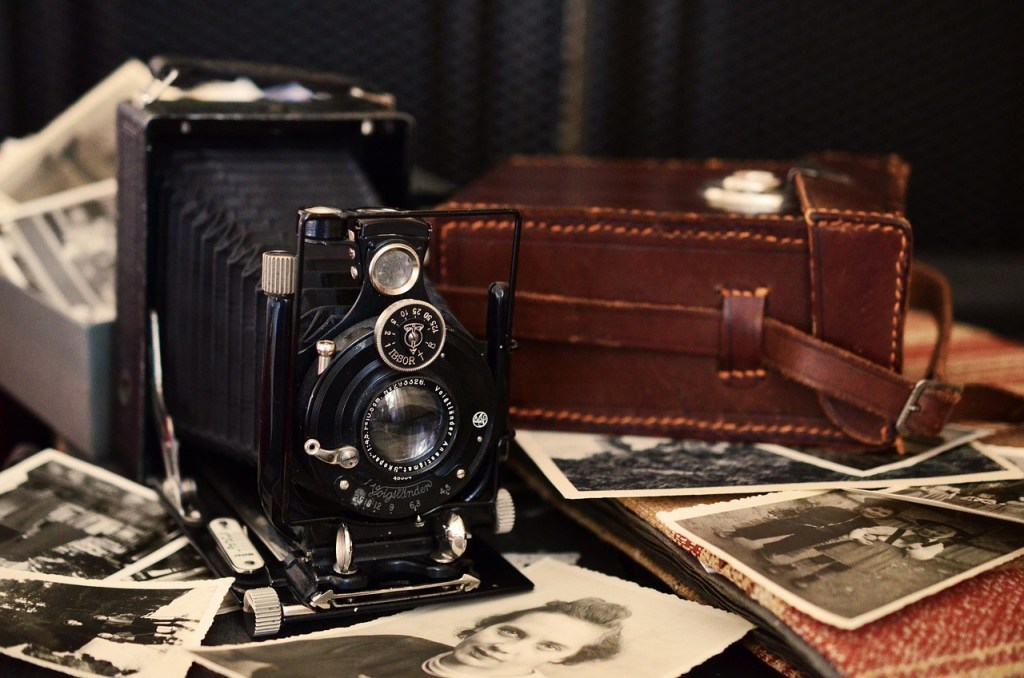
The invention of the camera changed the way people saw. The visible came to mean something different to them.
This was immediately reflected in the painting. For the Impressionists the visible no longer presented itself to man in order to be seen. On the contrary, the visible, in continual flux, became fugitive. For the Cubists the visible was no longer what confronted the single eye, but the totality of possible views taken from points all round the object (or person) being depicted.
The invention of the camera also changed the way in which men saw paintings painted long before the camera was invented. Originally paintings were an integral part of the building for which they were designed. Sometimes in an early Renaissance church or chapel one has the feeling that the images on the wall are records of the building’s interior life, that together they make up the building’s memory – so much are they part of the particularity of the building.
The uniqueness of every painting was once part of the uniqueness of the place where it resided. Sometimes the painting was transportable. But it could never be seen in two places at the same time. When the camera reproduces a painting, it destroys the uniqueness of its image. As a result its meaning changes. Or, more exactly, its meaning multiplies and fragments into many meanings.
This is vividly illustrated by what happens when a painting is shown on a television screen. The painting enters each viewer’s house. There it is surrounded by his wallpaper, his furniture, his mementoes. It enters the atmosphere of his family. It becomes their talking point. It lends its meaning to their meaning. At the same time it enters a million other houses and, in each of them, is seen in a different context. Because of the camera, the painting now travels to the spectator rather than the spectator to the painting. In its travels, its meaning is diversified.
Before the Virgin of the Rocks the visitor to the National Gallery would be encouraged by nearly everything he might have heard and read about the painting to feel something like this: ‘I am in front of it. I can see it. This painting by Leonardo is unlike any other in the world. The National Gallery has the real one. If I look at this painting hard enough, I should somehow be able to feel its authenticity. The Virgin of the Rocks by Leonardo da Vinci: it is authentic and therefore it is beautiful.’
To dismiss such feelings as naïve would be quite wrong. They accord perfectly with the sophisticated culture of art experts for whom the National Gallery catalogue is written. The entry on the Virgin of the Rocks is one of the longest entries. It consists of fourteen closely printed pages. They do not deal with the meaning of the image. They deal with who commissioned the painting, legal squabbles, who owned it, its likely date, the families of its owners. Behind this information lie years of research. The aim of the research is to prove beyond any shadow of doubt that the painting is a genuine Leonardo. The secondary aim is to prove that an almost identical painting in the Louvre is a replica of the National Gallery version.
The National Gallery sells more reproductions of Leonardo’s cartoon of The Virgin and Child with St Anne and St John the Baptist than any other picture in their collection. A few years ago it was known only to scholars. It became famous because an American wanted to buy it for two and a half million pounds.
Now it hangs in a room by itself. The room is like a chapel. The drawing is behind bullet-proof perspex. It has acquired a new kind of impressiveness. Not because of what it shows – not because of the meaning of its image. It has become impressive, mysterious, because of its market value.
The bogus religiosity which now surrounds original works of art, and which is ultimately dependent upon – their market value, has become the substitute for what paintings lost when the camera made them reproducible. Its function is nostalgic. It is the final empty claim for the continuing values of an oligarchic, undemocratic culture. If the image is no longer unique and exclusive, the art object, the thing, must be made mysteriously so.
Source : Ways of Seeing by John Berger
Goodreads : https://www.goodreads.com/book/show/2784.Ways_of_Seeing
Read Previous Article in Series :
Read the Next Article in the Series :







 Thinking Beyond Science
Leave a comment