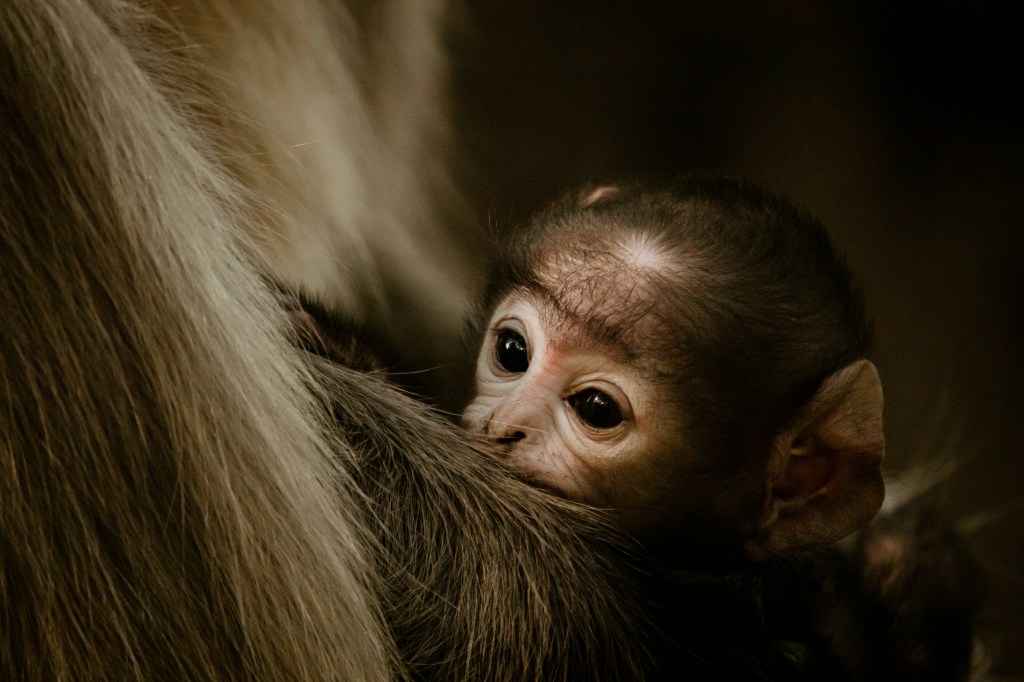
If you’re a member of a species that has evolved to live in groups, life is a game of strategy. Sharing a world with others means you must constantly navigate tricky social dynamics, outwit rivals, and secure enough resources for yourself and your offspring. Nowhere is this more apparent than among primates—masters of deception, coalition-building, and what scientists call Machiavellian intelligence, a term inspired by the cunning advice of the Italian Renaissance thinker Niccolò Machiavelli.
The Mental Demands of Social Life
Large-brained primates like humans rely on advanced cognitive skills to track and interpret the complex web of relationships within their groups. The bigger the social circle, the more mental juggling is required—not only must you remember every relationship between individuals, but also predict the consequences of interactions within every possible subgroup. The computational challenge grows fast: imagine just a dozen friends, and the number of possible pairings and alliances multiplies rapidly.
This kind of social navigation depends on powerful mental machinery. Our brains—especially the cortex—have evolved to meet these demands, expanding over evolutionary time to keep up with increasingly sophisticated group life. The ability to monitor others, anticipate their intentions, and plan your moves accordingly is fundamental to survival in a competitive social world.
The Birth of the Social Self
From the very start of life, social experience is key to building our sense of self. Infants are believed to be consciously aware, but whether they possess a fully-formed sense of self is still debatable. What’s clear, though, is that the process of developing this “self illusion” begins with early interactions—babies learn who they are, at least partly, by learning who others are.
Why Faces Are Everything
Identifying who’s who is crucial in any social group. Evolution has favored the ability to distinguish individuals—after all, failing to tell mates from close kin could spell disaster, both socially and genetically. Humans (and other primates) rely heavily on faces to make these distinctions, which is no small task: every face has the same basic template, yet the average person can recognize thousands of different faces.
This remarkable skill is powered by a specialized brain area called the fusiform gyrus, located just behind the ears. When this region is damaged, people may develop prosopagnosia—or face blindness—losing the ability to recognize even the most familiar faces.
Faces: The First Social Magnet
Our fascination with faces emerges almost immediately after birth. Like goslings that imprint on the first moving object they see, newborn humans have in-built circuitry that draws them to faces. Their vision may be blurry, but a simple face-like pattern—two dots and a line—can hold their gaze.
Within months, babies become adept at recognizing specific faces. By six months, they remember new faces days later, and at that age, they can recognize both human and monkey faces. This ability to distinguish non-human faces fades by nine months—a sign that our brains are tuned by experience to focus on what’s most socially relevant.
Smiles: Baby’s First Social Superpower
Though young human infants can’t scramble toward their mothers like baby birds, they’re equipped with another tool: imitation. Even days-old babies may stick out their tongues in response to seeing an adult do the same—a behavior also seen in baby monkeys.
But the most potent weapon in the baby’s social arsenal is the smile. With a tweak of a dozen tiny muscles, an infant can light up a room—and, more importantly, influence adult behavior. Smiling at an adult gets a smile in return, and this simple exchange triggers happy feelings in both parties. The act of smiling, even when artificially induced (like biting a pencil sideways), is enough to boost mood, revealing how closely our facial expressions and emotions are linked.
Smiling, Social Feedback, and the Growing Brain
The smile is more than a reflex; it’s part of the neural scaffolding that supports social behavior. This development depends on the orbital cortex, just above the eyes. Even before birth, ultrasound images reveal smiles in the womb, hinting at the hard-wired nature of this behavior.
Yet, early social experience is essential. Babies born blind and deaf, who have never seen a smile, begin to smile at the same age as sighted infants, but without reinforcing feedback from the environment, their smiling may dwindle. However, tactile stimulation—cuddling, bouncing, and tickling—can keep the smiles coming, demonstrating that the combination of biology and experience shapes our social instincts.
Sighted babies are even more responsive, beaming brighter when someone smiles back at them and growing distressed when adults’ faces freeze into a neutral or sad expression. By six months, they’re sensitive to emotional cues, crying at angry faces and frowning at sad ones. Our youngest group members, it seems, already know to expect and prefer smiles.
In summary:
Living in social groups demands big brains and sharp minds, able to track friends and foes alike. Evolution has equipped us and our primate relatives with an extraordinary knack for recognizing faces and reading emotional cues—nowhere more evident than in the magical social dance between adults and smiling babies. The next time a baby grins at you, remember: it’s not just cute—it’s an ancient, powerful tool at work in the arena of social survival.
Source : The Self Illusion: Why There is No ‘You’ Inside Your Head by Bruce M. Hood
Goodreads : https://www.goodreads.com/book/show/13384559-the-self-illusion
Read the Next Article in the Series :
Read the Previous Article in the Series :







 Thinking Beyond Science
Leave a comment