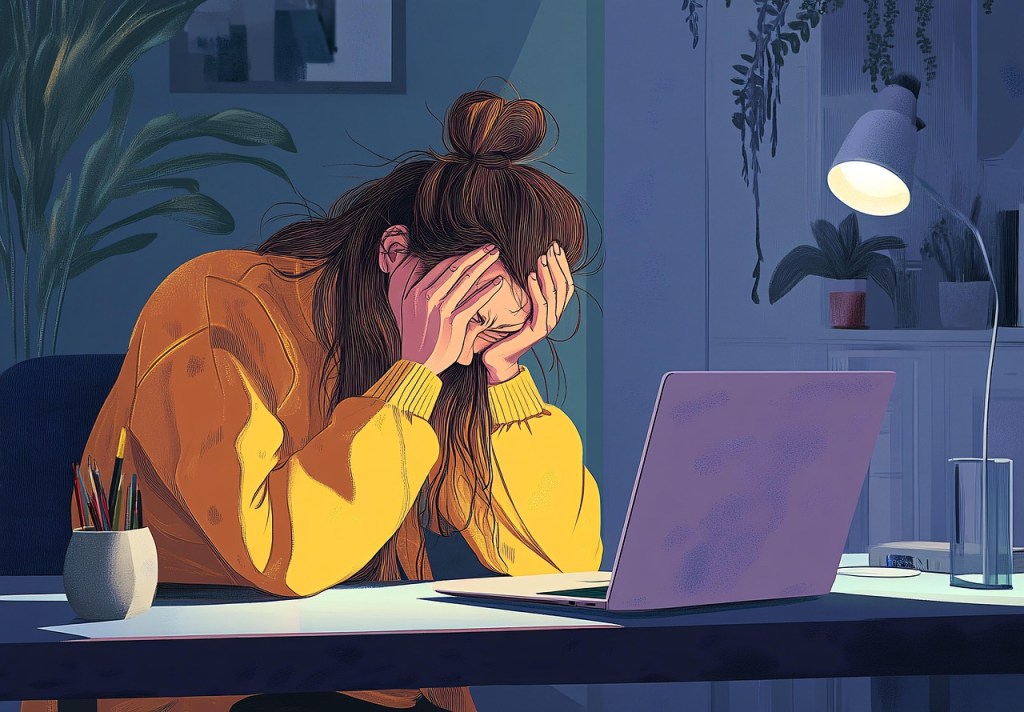
The Covid-19 pandemic didn’t just infect people — it infiltrated our daily lives, reshaping how we think, work, and connect. While much attention has been placed on the virus itself, another silent crisis grew alongside it: burnout.
Before the pandemic, burnout was a term mostly reserved for high-pressure professions: ER doctors pulling 24-hour shifts, consultants living out of hotel rooms for weeks at a time, accountants surviving tax season. But by the time 2021 ended, burnout had spread far beyond these high-intensity roles. It had become a near-universal experience, touching people of all ages, in all industries, and in all corners of the globe.
The world experienced a perfect storm: global unpredictability, impractical working conditions, prolonged isolation, and a relentless stream of grim headlines. With people dying, some began questioning why they were losing sleep over unread emails or minor office politics. Suddenly, the relentless grind of the workplace seemed trivial against the backdrop of tragedy. According to the World Health Organization, rates of anxiety and depression worldwide spiked by 25% in the first year of the pandemic — a figure that underlines how deeply global events infiltrated our personal well-being.
A World Turned Upside Down
Overnight, life as we knew it evaporated. “Temporary” measures stretched into endless uncertainty. Parents tried to keep their jobs afloat while simultaneously becoming full-time caregivers and teachers. Those living with roommates found themselves negotiating work schedules, fighting for quiet during meetings, and sharing cramped, makeshift home offices. Students watched one milestone after another disappear — graduation ceremonies canceled, athletic seasons scrapped, college admissions delayed.
This wasn’t short-term stress anymore — it was prolonged, relentless, and for many, hopeless. By late 2021, surveys found that nearly two-thirds of professionals reported feeling burned out. What had once been an occupational hazard of a select few became an all-too-common condition affecting millions.
Burnout: Death by a Thousand Paper Cuts
We tend to think of burnout as the result of a single, overwhelming problem — a toxic boss, an unmanageable workload, or a crisis that pushes someone over the edge. The truth is more insidious. Burnout is the slow erosion of well-being from countless small compromises and neglected needs over time.
It’s rushing every morning with no breathing room. It’s logging back in “just to wrap something up” after dinner… and realizing it’s midnight. It’s feeling guilty for not starting a passion project because you’re mentally and physically drained. It’s skipping social outings not because you don’t care about your friends, but because you have nothing left to give. These seemingly small choices stack up, and over months or years, they lead to exhaustion, disconnection, and despair.
The Toll on Mind and Body
Burnout isn’t just a “mental” state; it’s a full-body crisis. Studies link it to a host of chronic conditions:
Sleep disorders — irregular or poor-quality rest wrecks mental sharpness and emotional stability.
Depression and anxiety — constant stress reshapes neural pathways, making negativity and hopelessness more dominant.
Musculoskeletal pain — stress tension often manifests in the neck, back, or wrists.
Cardiovascular disease — prolonged stress hormones raise blood pressure and strain the heart.
Immune suppression — making the body more vulnerable to illness.
At the center of this cascade is cortisol, the body’s primary stress hormone. In small bursts, it helps us deal with immediate challenges. But when that “alarm system” never turns off — as in sustained burnout — cortisol becomes toxic, fueling inflammation, raising blood sugar, and eroding overall health.
Productivity Myths and the Trap of “Earning Your Stripes”
One of the biggest cultural traps is the idea that sacrificing work-life balance is a necessary stage of success — that grinding harder and longer will lead to later freedom. Many professionals feel that if they just push a little harder now, their future selves will thank them.
But research consistently proves the opposite: setting healthy boundaries and preserving personal time increase productivity, creativity, engagement, and retention over the long term. A career isn’t a sprint; it’s a marathon. Burnout is a sign that you’re running the race without fuel — and that’s a losing strategy.
Why Social Connection Matters
Healthy, supportive relationships are one of the strongest buffers against burnout. Whether it’s your closest friend, a trusted coworker, or a family member you call daily, social bonds are deeply protective for our mental health.
But here’s the cruel irony: burnout steals the very resources we need to recover. Exhaustion makes us more likely to cancel plans, stop reaching out, and isolate ourselves. The protective circle that could help us heal shrinks just when we need it most. This is why breaking the cycle requires conscious, intentional effort to reconnect — even in small ways.
Running on Fumes: The Psychology of Burnout
Stress, in the right doses, is motivating. It keeps us alert, responsive, and engaged. But prolonged, unmanaged stress transforms into something far darker. The body stays in fight-or-flight mode without pause, sleep becomes fragmented, and fatigue accumulates. Slowly, perspective changes:
Short-term stress feels like a challenge that, with extra effort, we can overcome.
Burnout feels endless and insurmountable, like an unchangeable reality.
In that space, optimism fades, motivation evaporates, and hope can be replaced by resignation.
The Breaking Point — and the Great Reassessment
By 2021, collective burnout reached such heights that people began to ask the most basic, existential question: What am I doing all this for? The reminder of life’s fragility — magnified throughout the pandemic — fueled a re-evaluation of how we spend our finite time. Out of that soul-searching came several major workforce shifts:
Quiet Quitting — workers stayed in their roles but stopped going “above and beyond” without fair compensation.
The Great Resignation — millions quit their jobs entirely.
The Great Reshuffling — many switched careers or industries in pursuit of healthier work environments.
Social media amplified quiet quitting in 2022 and 2023, especially among younger workers who felt years of overfunctioning had been met with minimal acknowledgment — or worse, more work without a pay raise or title. Tasks that were once seen as “helping the team” came to be recognized as unpaid, unrecognized labor.
Misunderstanding the Movement
Critics of these shifts often fall back on the complaint that “nobody wants to work hard anymore.” But this oversimplifies the reality: quiet quitting and similar trends are not rejections of hard work — they are rejections of unsustainable work. Scaling back is not laziness; it’s a conscious decision to protect mental and physical health.
Burnout is not a personal failing or a lack of grit. It’s the predictable result of prolonged stress without proper recovery. Changing how we respond to burnout is as much about shifting culture as it is about personal habits.
Moving Forward: Reclaiming Well-being
Burnout recovery starts with small, intentional choices. From the moment you wake up to the minute you go to bed, the ways you spend your time accumulate into the life you’re living. Ask yourself:
- Am I giving all my energy to work at the expense of my health?
- Do I guard time for relationships, rest, and hobbies?
- When I feel depleted, do I push through — or pause to recover?
The answers will reveal whether you’re moving toward balance or teetering on the edge of burnout.
Ultimately, work should be part of a fulfilling life — not the whole of it. A job, no matter how prestigious, isn’t worth trading away your health, joy, and connection to others. The goal isn’t to do less for the sake of it, but to align your effort with what truly matters and protects your well-being.
✅ Key Takeaway: Burnout is living on fumes — physically, mentally, and emotionally — for far too long. It’s avoidable, but only if we recognize it, respect our own limits, and remember that productivity without well-being is not success.
Source : The Cure for Burnout: How to Find Balance and Reclaim Your Life by Emily Ballesteros
Goodreads : https://www.goodreads.com/book/show/185034564-the-cure-for-burnout
Read the Next Article in the Series :




 Thinking Beyond Science
Leave a comment