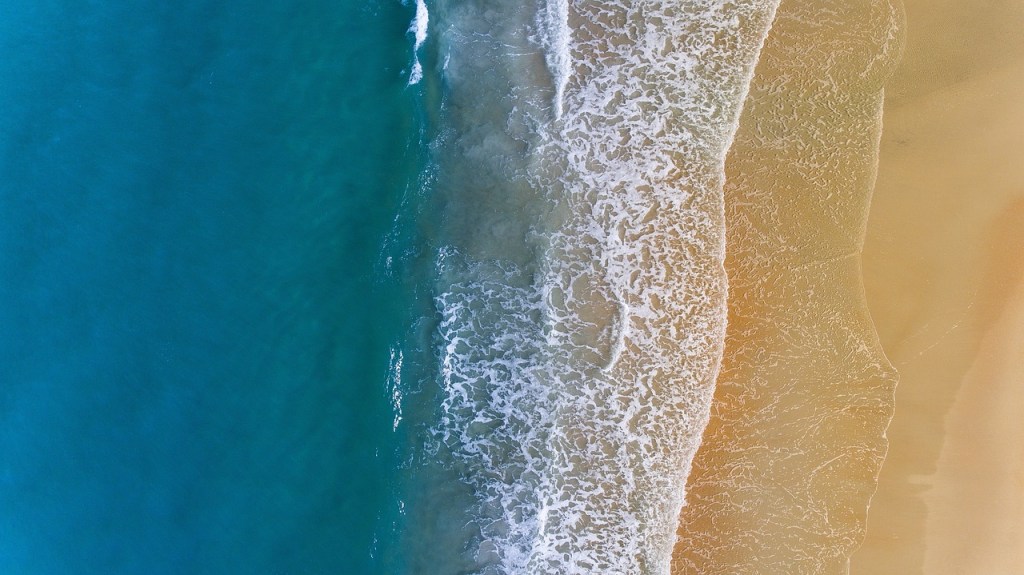
Ocean acidification ranks among the gravest environmental crises of the Anthropocene, not because it is visible or loud, but because its consequences are so many and so far-reaching. Each reason to worry leads to yet another, forming a litany of disruptions that ripple through the delicate chemistry of the seas and threaten life from the smallest microbes to the largest coral colonies.
How Acidification Disrupts Marine Life
Ocean acidification fundamentally alters the chemistry of seawater, making it harder for organisms to perform essential life functions. Depending on their capacity to regulate internal chemistry, marine species may see their metabolism, enzyme activity, and protein functions compromised. Microbial communities—the unseen engines of nutrient cycling—are particularly vulnerable, and their disruption changes the availability of key nutrients like iron and nitrogen. This, in turn, affects the clarity of ocean waters and the propagation of sound, while also favoring the growth of toxic algae.
For photosynthetic plants, some may temporarily benefit from elevated carbon dioxide levels, but not all changes are benign. On a chemical front, acidification alters the forms and behavior of dissolved metals, sometimes rendering them poisonous to marine organisms.
Why Calcification Matters
To understand why acidification is so dangerous for marine life, consider the process of calcification, which is like construction done at a microscopic scale but governed by strict chemistry. Many sea creatures—clams, corals, barnacles—must coax calcium and carbonate ions out of seawater to build their shells or skeletons. However, acidification means fewer carbonate ions are available, making it much harder and more energy-intensive for these “builders” to do their work. If acidification becomes severe, seawater can actually become corrosive, causing calcium carbonate structures to dissolve.
Human Impact at a Record Pace
Humans are the prime drivers behind this crisis. Roughly one-third of all carbon dioxide released into the atmosphere by human activity has been absorbed by the oceans—a staggering 150 billion metric tons so far. The rate of this absorption is unprecedented: geophysical safeguards like rock weathering simply cannot keep up. As Rachel Carson remarked, “Time is the essential ingredient, but in the modern world there is no time.” Put simply, humanity is running geologic history in reverse—at lightning speed.
Coral Reefs—Silent Engine of Diversity
Among all calcifiers, corals are uniquely important. Instead of working alone, coral polyps collaborate over generations in vast communal building projects, producing reefs so immense that even the pyramids of Giza pale in comparison. These living structures, like the Great Barrier Reef, which stretches over 2,600 kilometers, provide the foundation for entire ecosystems.
Corals do not compete with other organisms for space; they support thousands, if not millions of species, creating one of nature’s most efficient recycling networks. If corals disappear, these intricate platforms vanish, transforming vibrant underwater cities into barren deserts.
The Chemical Squeeze on Reefs
The health of coral reefs hangs on a crucial chemical measure known as aragonite saturation state. Before industrialization, reefs flourished in waters with high saturation. Now, there is almost nowhere left with a “good” aragonite state—and soon, no area will have even a marginally safe one if emissions continue apace. As this metric falls, corals require ever more energy to calcify, and many will stop altogether. Long before the chemistry becomes fatal, reefs will be weakened by waves, predation, and erosion.
The Multifront Assault on Coral Reefs
Corals are beset by more dangers than just acidifying seas. Overfishing can cause algae to overrun reefs; agricultural runoff and deforestation foul the water, while destructive fishing practices obliterate entire sections. These compounding stresses leave coral communities vulnerable to pathogens and disease.
Warming oceans add another blow. Corals live in partnership with microscopic algae called zooxanthellae, which supply them with food via photosynthesis. When seas get too warm, this partnership breaks down spectacularly. Corals expel their algal partners, losing their color—a process known as coral bleaching. If stressful conditions persist, corals stop growing and may die outright.
Bleaching events have already taken a heavy toll: major episodes in 1998, 2005, and 2010, with increasing frequency and intensity expected as global warming accelerates.
A Race Against Time
A landmark 2008 study in Science revealed that a third of reef-building coral species are now in danger of extinction—making them one of the most threatened groups on earth, rivaled only by amphibians. With every year, the complex, generous world created by corals edges closer to collapse.
Ocean acidification is more than a chemical curiosity or a concern for the distant future. It is an accelerating, invisible crisis that attacks life at its foundation and imperils the vital coral cities on which so much ocean life—and ultimately human life—depends.
Source : The Sixth Extinction: An Unnatural History by Elizabeth Kolbert
Goodreads : https://www.goodreads.com/book/show/17910054-the-sixth-extinction
Read the Next Article in the Series :
Read the Previous Article in the Series :







 Thinking Beyond Science
Leave a comment