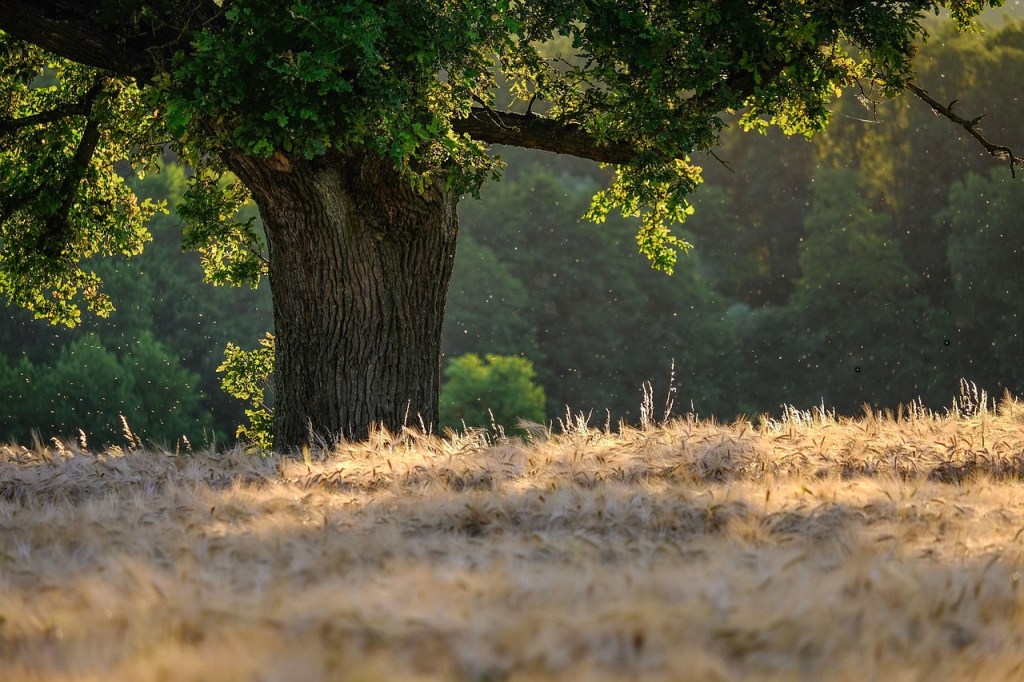
In the quiet shade of a forest, young trees dream of touching the sky. Their will to grow is fierce — they can shoot up nearly 18 inches a season without hesitation. But their elders, the towering matriarchs above, have other plans. Spreading vast crowns of leaves, these wise old trees gently discipline their offspring by blocking the light. Only about 3% of sunlight reaches the forest floor. For young saplings, that’s barely enough to stay alive.
This slow start, however, is their path to resilience. Trees that grow under shade remain slim as pencils and no taller than a human. Their wood, dense and fine-grained, resists breaking in storms and even slows fungal attacks. The forest, it seems, values endurance over haste.
Nature’s Etiquette for Trees
Every ancient forest follows a hidden code of conduct — an unspoken etiquette of shape and strength. A mature deciduous tree stands with a straight trunk, strong roots spreading evenly in all directions, and a crown reaching heavenward. It’s not just for aesthetics. This balance allows the tree to channel the power of windstorms and snow loads evenly through its body.
When trees stray from this balance, trouble follows. A curved trunk bears its crown unevenly, forcing it to add extra dense wood for support — visible later as dark rings. Forked trunks, particularly those forming a sharp “V,” are even riskier. Under intense wind, the junction weakens and may split entirely. Only the graceful “U”-shaped forks survive the test of time.
Yet, not every tree plays by these forest rules. Those at the edge of the woods — beside meadows or lakes — grow wild and free, bending toward light. With their trunks nearly horizontal, they risk breaking under snow, but they accept this trade-off. A shorter, brighter life is better than a long, shaded existence without purpose.
Thirst and the Art of Restraint
For trees, water is life. A mature beech can pump more than 130 gallons of water a day through its veins. But in summer, this indulgence can be fatal. So, during winter when rain is plentiful, the beech quietly stores water deep within itself, preparing for the dry months ahead.
Still, droughts come, and the reckless drinkers — the largest, most luxuriant trees that use water lavishly — are always the first to suffer. The forest rewards moderation, not abundance.
The Pain That Builds Strength
Winds teach trees their final and most enduring lesson — stability. As trunks bend and sway, tiny internal tears form where the wood strains most. These micro-injuries trigger healing and reinforcement. The tree diverts its energy from upward growth to inner fortification. Growth slows, but wisdom deepens.
When light floods the gaps left by fallen elders, surviving trees still tread carefully. Their leaves, adapted to shade, burn easily. It takes two whole seasons for them to grow new, sun-hardened foliage. Even in abundance, the forest practices restraint, never rushing its transformations.
In every rustle of leaves and every ring within a trunk lies a story of patience, endurance, and quiet mastery. The forest teaches us that true growth is not about soaring quickly but about standing strong — season after season, storm after storm.
Source : The Hidden Life of Trees: What They Feel, How They Communicate: Discoveries from a Secret World by Peter Wohlleben, Tim Flannery (Foreword), Jane Billinghurst (Translator)
Goodreads : https://www.goodreads.com/book/show/28256439-the-hidden-life-of-trees






 Thinking Beyond Science
Leave a comment