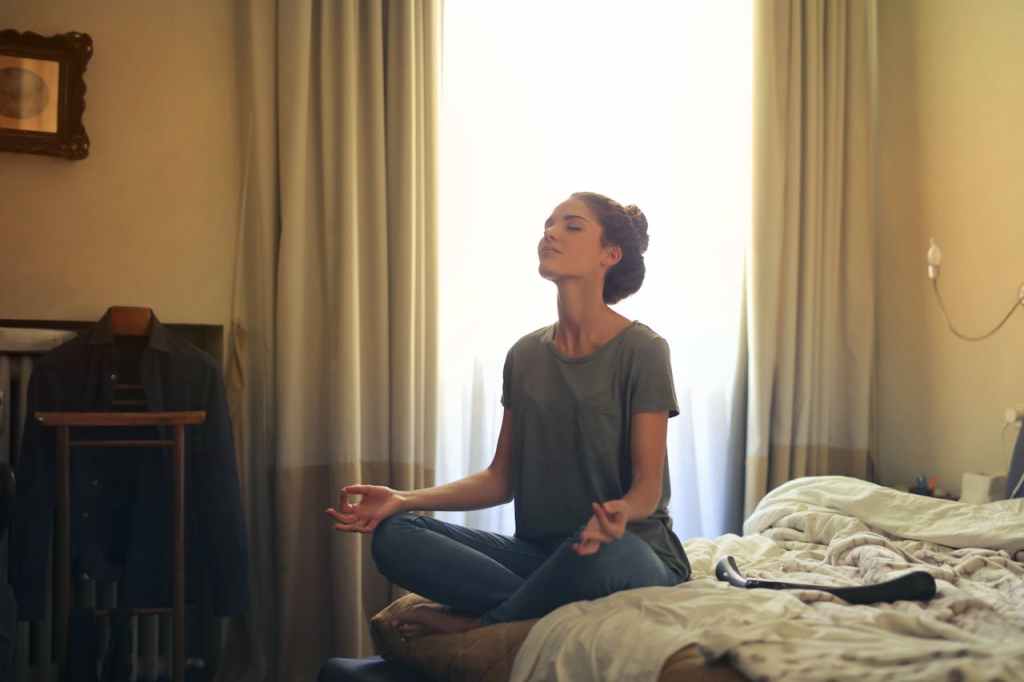
Meditation is a gentle and accessible practice that almost everyone can enjoy, regardless of experience or flexibility. Its essence lies in simplicity: by stilling the body, calming the breath, and focusing the mind, anyone can tap into deeper states of awareness and tranquility. Let’s explore these three foundational aspects in depth to help you begin—or refine—your meditation journey.
Creating the Ideal Meditation Posture
A good meditation posture is still, steady, and relaxed. The misconception that you must sit in a complex lotus pose often deters beginners, but it is not at all necessary. The key is to keep your head, neck, and trunk aligned so you can breathe freely and without strain.
- Sit on the floor with a folded blanket for padding, and use a thick cushion to elevate your hips by three to four inches. This relieves pressure on your hips and knees, making a big difference in comfort and helping maintain spinal alignment.
- The head should rest quietly above the shoulders, not tilted or strained. Allow your eyes to gently close—no squinting or pressure.
- Let your facial muscles go slack, your jaw relaxed, and your mouth gently shut.
- Your arms should rest on your knees, so relaxed that if someone lifted your hand, your arm would feel limp. Joining the thumb and index finger (“finger lock” or mudra) forms a gentle circuit, symbolically recycling your energy.
- Over time, as your body becomes more flexible with practice, you may find you can use a thinner cushion or even sit directly on the floor.
- Avoid meditating while lying down, as this tends to bring sleep or drowsiness and makes it difficult to remain alert. Sitting upright allows energy to flow more freely through your spine—a subtle but significant aspect of meditation practice.
The Importance of Serene Breathing
A calm and natural breath is central to meditation. Breathing should be smooth, relaxed, and diaphragmatic—always through the nostrils. When the body is aligned and at ease, breathing naturally becomes more serene, helping to steady not just the body but also the mind.
If you catch your breath becoming shallow or strained, gently return your awareness to the sensations of breathing, letting each inhale and exhale guide you back to stillness.
Quieting and Focusing the Mind
Trying to force the mind into stillness, or pressuring yourself to achieve something specific during meditation, is usually frustrating. The mind’s natural activity—thinking, wandering, associating—doesn’t disappear through sheer will.
Instead, meditation allows the mind’s energies to settle by providing a single point of gentle focus. Many traditions use a word, phrase, symbol, or sound—often called a mantra—for this purpose.
- Meditation is not about making the mind “empty.” Rather, it’s about giving the mind something simple (like a mantra) so it can rest its scattered attention in one place.
- True concentration in meditation doesn’t involve strain or effort. It means resting deeply in an alert yet relaxed state of focus—a sweet spot where awareness remains calm and attentive without tension.
- If your mind drifts, gently and without judgment bring your attention back to your chosen focus. Over time, this process becomes easier and more natural.
Gentle Progress, No Pressure
Meditation is unique in that less effort often brings greater rewards. The less you fight with yourself or push for results, the more deeply you can relax and the more inner stillness you will discover.
Progress in meditation doesn’t mean controlling the mind or achieving rare states; it means learning to relax more deeply each time, making space for stillness and inner focus to grow naturally.
Start with comfort, practice gentle attention, and allow your experience to unfold. Each session will help cultivate a steadier body, a quieter breath, and a more peaceful mind.
Source : Meditation and Its Practice by Swami Rama
Goodreads : https://www.goodreads.com/book/show/499994.Meditation_and_Its_Practice
Read the Next Article in the Series :







 Thinking Beyond Science
Leave a comment