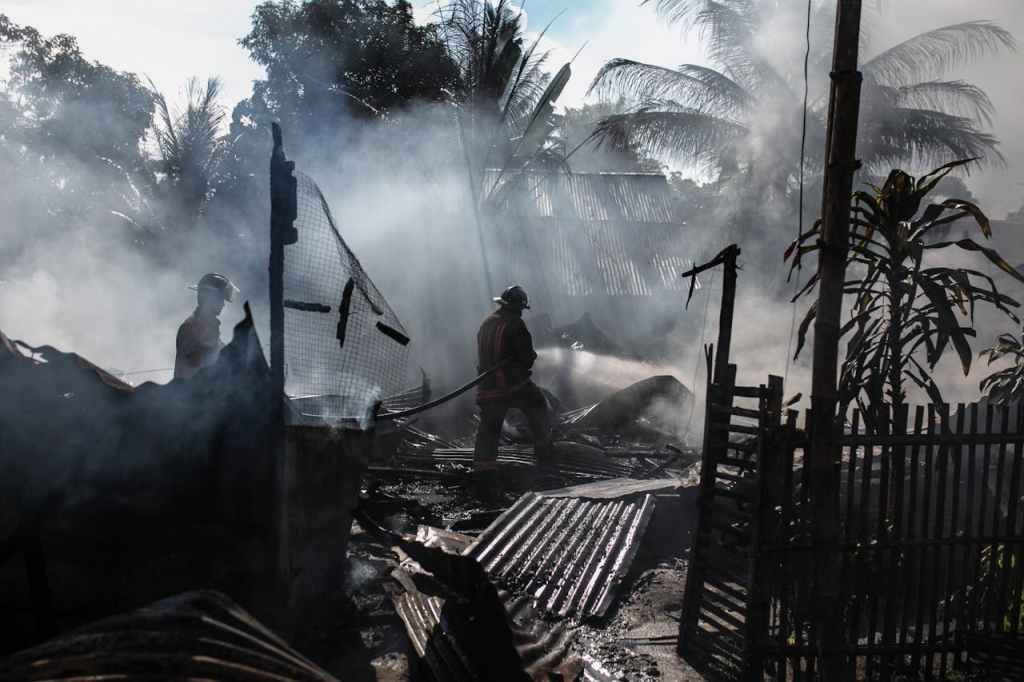
Big events and big changes rarely arrive in the same way. The core idea in your material is that building anything valuable is slow, fragile, and complex, while breaking it is fast, simple, and brutally efficient.
Complex to build, simple to break
The examples of Pearl Harbor, September 11, COVID-19, Lehman Brothers, Enron, Nokia, Gaddafi, Notre-Dame, and even the Soviet Union show a common pattern: things that take decades to rise can be undone in days or even minutes. Growth always encounters resistance—competition, gravity, limited attention, regulation—while decline usually faces no such organized opposition. Progress has to fight for every inch; collapse just needs one weak spot.
The human body captures this contrast perfectly. Tens of billions of precise steps are needed to turn a microscopic embryo into a newborn with trillions of synapses and coordinated organs. Death, on the other hand, is usually just one simple failure: blood and oxygen no longer reaching where they are needed. Creation demands staggering coordination. Destruction, most of the time, only requires a single break in the chain.
Why bad news dominates attention
This asymmetry explains why bad news feels so loud. Good news is mostly invisible: the deaths that never happened, the diseases you didn’t catch, the wars that never started, the injustices quietly prevented. These are hard to see, measure, or emotionally grasp. Bad news, in contrast, is vivid and impossible to ignore—the terrorist attack, the war, the car crash, the pandemic, the market collapse, the bitter political fight in front of your eyes.
The result is a world where slow, steady progress almost always coexists with a constant drumbeat of shocking setbacks. Setbacks feel larger than life simply because they happen quickly and dramatically, not because they are more powerful than progress. The normal state of affairs is quiet advancement interrupted by noisy disaster.
Small steps, huge consequences
Another key idea is that both catastrophe and progress are usually the result of tiny, compounding steps. A study on obesity illustrates this: the problem often isn’t giant meals, but small snacks sprinkled through the day that quietly add up. Many disasters follow the same script: a chain of minor, easy-to-ignore risks that multiply into something enormous.
Nuclear risk is a dramatic example. The Cuban Missile Crisis involved missiles far less powerful than the largest nuclear bombs ever built, but even a single launch could have triggered full-scale retaliation. Decisions like pushing for “smaller, more usable” nuclear weapons unintentionally made large-scale war more likely, because they lowered the barrier to starting the chain reaction. Big risks hide inside sequences of small, individually reasonable choices.
COVID-19 as a chain reaction
COVID-19 felt like a single, out-of-the-blue catastrophe. In hindsight, it was many ordinary risks colliding at once. A new virus jumped to humans, people moved and interacted as they always do, early information was unclear, bad news was delayed or suppressed, governments hoped it would stay contained, responses were slow and bureaucratic, preparations were weak, and drastic lockdowns became the default tool when time ran out.
Individually, none of those steps is shocking. Together, they created a global crisis. The lesson is that what looks like a rare, one-in-a-billion event is often a stack of common, high-probability events compounding at the same time. That is why it is reasonable to assume “the world will break” roughly once a decade, and also why people are constantly surprised when it does.
Compounding: disaster and progress
The same compounding logic also powers the best things in the world. Evolution’s real magic is not a single mutation; it is 3.8 billion years of tiny changes layered on top of one another until the result looks like magic. Most progress—technological, social, economic—works in the same way: small improvements that are barely noticeable in the moment, but transformative over long stretches of time.
The irony is that the forces quietly working in humanity’s favor are usually stronger than the shocks that periodically set us back. The problem is timing and visibility. Destruction is sudden and cinematic. Progress is slow and subtle. Understanding that “complex to make, simple to break” is a universal rule can change how you see the world: it makes you humbler about risks, more patient about improvement, and more appreciative of the calm, uneventful days when nothing seems to happen—because those are the days when the compounding engine of progress is quietly doing its work.
Source : Same as Ever: A Guide to What Never Changes by Morgan Housel
Goodreads : https://www.goodreads.com/book/show/125116554-same-as-ever
Read the Previous Article in the Series :






 Thinking Beyond Science
Leave a comment