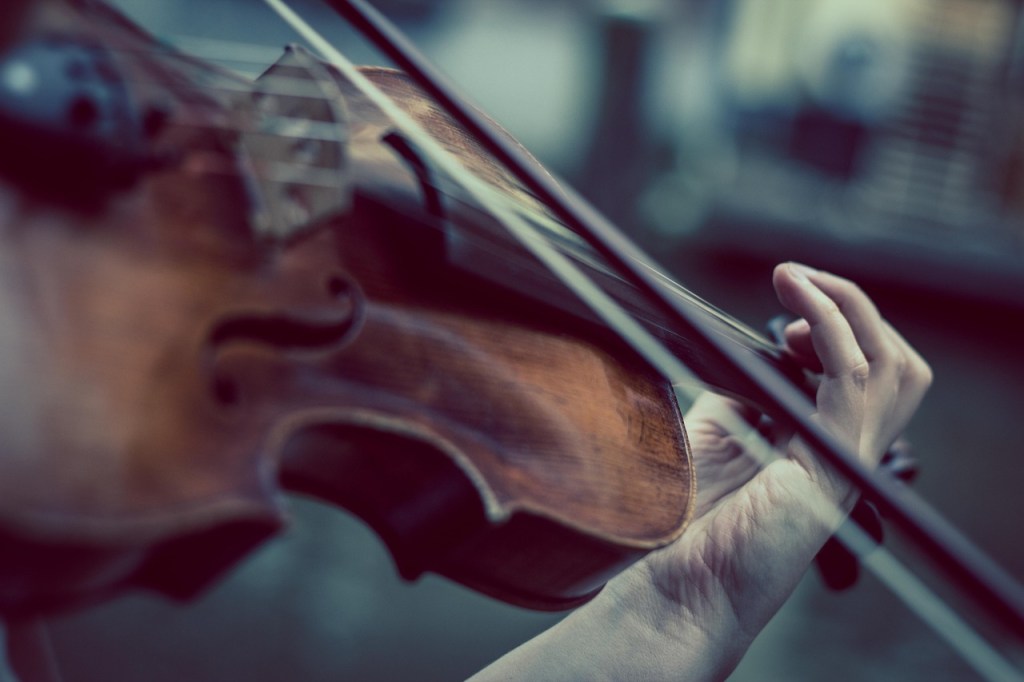
We have three basic types of long-term memories: memory for information, memory for what happened, and memory for how to do things.
Popular culture calls this ability to perform a previously learned skill muscle memory. With repetition and focused practice, complex sequences of previously unrelated physical movements can be bound together and executed as a single action instead of as a series of separate, labored steps. When the precise pattern is committed to memory, it can be performed fluidly, faster, more accurately, and without conscious thought about how to do it. So we can play “Für Elise” on the piano, drive to work, catch a ball, walk to the kitchen, or ski down a mountain without devoting any conscious energy to how these things are done while we do them. In the words of Nike, we just do it. And while you might not remember what your spouse said five minutes ago, muscle memories are remarkably stable and can be called back into play even after sitting on the bench for decades.
But the term muscle memory is a misnomer, and I’m here to restore credit to its rightful owner. Your body can perform the Chicken Dance once you’ve learned the routine, and it might feel as if your arms and legs remember how to do the steps, but the program for this choreography doesn’t live in your muscles. It’s in your brain.
How to do the things you know how to do are memories activated in your brain, but this kind of memory is a bit different from memory as you’re used to thinking about it. We typically consider memory to be the stuff we know (an octagon has eight sides, our phone number, the earth is round) and the stuff that happened (1 tore my anterior cruciate ligament playing rugby in college, Pharrell Williams gave me a thumbs-up and a smile after one of my talks, I went to a wedding last weekend). These kinds of memories are called declarative. You can declare that you remember or know something. Retrieval of declarative memories involves the conscious recall of previously learned information and previously lived experience.
Muscle memory is different. This is your memory for motor skills and procedures, the choreography of how to do stuff. Muscle memory is unconscious, remembered below your awareness. Driving a car, riding a bicycle, eating with chop-sticks, kicking a football, brushing your teeth, and typing are all muscle memories. Once upon a time, you didn’t know how to do these things. Then, through a lot of repetition and refine-ment, you learned. You committed the steps to memory. And now, when you go to ride a bike, you don’t have to stop and think, Wait, let me recall how to do this first.
To create a highly accurate, repeatable, automated pattern of movement that in this case is hitting a golf ball, the sequence of individual physical steps must become connected-linked together into a single retrievable memory. While semantic and episodic memories are consolidated via the hippocampus, muscle memories are bound together by a part of the brain called the basal ganglia. As the sequence of physical steps is practiced, it is translated into a connected pattern of neural activity. As you continue to learn the skill, another part of the brain called the cerebellum provides additional feedback. Stand a little more to the left. Don’t bend your wrist. Adjustments and refinements in movement are made. And you improve.
While the hippocampus is essential for forming new episodic and semantic memories, this brain structure isn’t involved at all in creating muscle memories. Henry Molaison, the young man who had both hippocampi surgically removed in an effort to treat his unrelenting seizures, was never again able to lay down any new consciously held memories. But remarkably, he could still create new muscle memories. He couldn’t rement-ber what happened five minutes ago, but he could still earn how to do new things.
So, consolidation of muscle memories requires repeated activation through lots of focused practice. Once the pattern of neural activation for a skill is consolidated, the memory for how to hit a golf ball then resides in the linked activation of neurons in your motor cortex. These are the neurons that, through connections in the spinal cord, tell all the voluntary muscles of your body what to do. Wiggling your left big toe, pointing your right index finger, leaping into the air in a grand jeté, and hitting a golf ball with a club can all be mapped to the firing of distinct neurons in your motor cortex.
As with other kinds of memory, with continued repetition your muscle memories become stronger and more efficiently retrieved. And because these connected neurons tell the body what to do, you get better at doing things with practice. Practiced skills become more stable and consistent.
Some of this improvement is due to the training of the muscles in your body. If you practice running the 110-meter hurdles over and over, the muscles involved in sprinting and leaping over those hurdles become strengthened and sculpted for performing that particular skill, and you’ll improve. But your ability to run over those hurdles faster and without falling has primarily developed because you’ve repeatedly activated and strengthened specific neural connections in your brain.
You’re a better hurdler not just because your quads got bigger. I can do squats all day long, develop huge quadriceps muscles, and never make it over that first hurdle cleanly. You’re better at hurdling with practice because your brain got bigger.
As you progress from novice to master, brain scan studies show that the parts of your motor cortex activated by that skill become enlarged. So, for example, the part of your motor cortex responsible for movement in your fingers becomes enlarged if you’re a pianist, and it takes up even more real estate if you’re a virtuoso versus a novice player. Becoming an expert in any physical skill is a result of more neural connections, more brain matter devoted to that muscle memory.
Whatever you do over and over changes your brain, then your brain changes how you move your body. There’s no precise prescription for how much practice is enough to change your brain, but it generally takes much more repetition to learn a new skill than it does to learn someone’s name or remember where you parked your car. In his book Outliers, writer Malcolm Gladwell popularized the notion that it takes ten thousand hours of practice to go from novice to expert. At first glance, this number feels absurdly high. For example, I take a one-hour dance class once a week. I’ll be labored and clumsy and make a lot of missteps the first time my teacher shows us the choreography to “Uptown Funk” by Mark Ronson, featuring Bruno Mars, but after two or three more classes, I’ll have practiced enough to commit the routine to memory, and I’ll be able to perform it with no mistakes.
Source – Remember: The Science of Memory and the Art of Forgetting by Lisa Genova
Goodreads –https://www.goodreads.com/book/show/54895704-remember
Read the Previous Article in the Series :





 Thinking Beyond Science
Leave a comment