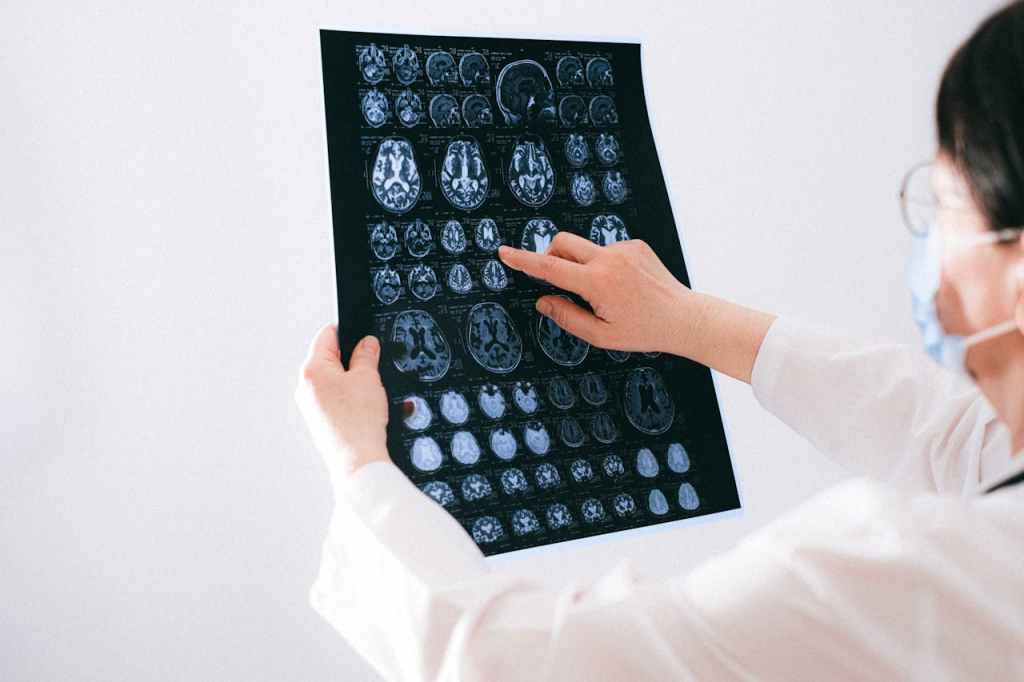
Our brains are electric—so electric, in fact, that their combined charge could light a bulb. But this is not a light-switch model of thought. Thinking is no mere flicker of illumination. It’s movement, modulation, tone—an endless flow of energy tracing patterns like a murmuration of starlings rolling and folding through the sky.
To focus on a single neuron is like trying to understand the ocean by studying a single drop. One neuron is silence; a hundred billion together compose the tidal music of mind. Our thoughts are not sparks, but waves—brainwaves—that surge and ebb beneath the calm surface of consciousness. That rhythm, those deep currents, are what make us who we are.
When Mind Meets Flow
There are moments when these waves align, when the orchestra of the brain plays in perfect synchrony. Psychologist Mihaly Csikszentmihalyi called this the flow state—a holistic immersion in action and awareness. In this state, the chatter of the prefrontal cortex quiets, the sense of self recedes, and thought and performance merge. We lose track of time, of distractions, even of ourselves. What remains is pure doing, pure being.
In flow, the brain becomes an efficient engine, producing alpha waves—the same frequencies we experience in gentle wakefulness, when the mind idles and ideas drift in like morning fog. Creativity, connection, clarity—all begin here, in this serene neural rhythm between action and stillness.
The Brain’s Inner Weather
Our brains are not only attuned to the world around us—they listen constantly to the world within. Every flutter of the heart, every breath, every twinge is registered in its internal dialogue. This self-sensing is called proprioception when it tracks our body in space, and interoception when it monitors our inner landscape—moods, needs, and physical states.
Sometimes, when this dialogue falters, the boundaries of self can blur into strange territory. Individuals with xenomelia, for instance, may feel that a limb does not belong to them at all. Here, the mystery of the insula—a hidden “island” of the brain that quietly shapes our sense of self—reveals itself. Tucked deep between lobes of feeling and reason, the insula is the bridge between the physical and the psychological, the outer and the inner.
The Spine: The Brain’s Living Tail
The human brain extends beyond the skull, flowing down into the spine—a shimmering corridor of nerves wrapped carefully in bone. Surgeons describe it as a beauty: pale, delicate, pulsing with life. It is the same substance as the brainstem, still whispering secrets from the reptilian core of evolution.
Beneath the skin, just four inches deep, this elegant structure links every sensation we feel to the intricate storms of thought above. Sever its filaments, and communication falters; the body’s music falls silent. Within that fragility lies something astonishing—the coexistence of vulnerability and vitality that defines all living things.
The Courage to Misstep
Science itself evolves like the brain: not through static perfection but through motion, through the courage to err. Progress in knowledge and life does not spring from safety but from the willingness to misstep, to fail and learn again. The mind grows most in the moments when it is stretched—when it teeters on the edge between knowing and not knowing.
The brain, in all its loops and murmurs, is not just an organ. It is an ecosystem, a living universe. It hums with the resonance of our every thought, emotion, and dream. Within its folds, both fragile and fierce, lie the stories of our becoming—proof that consciousness is not a light that turns on and off, but an endless, luminous tide within us all.
Source : Life on a Knife’s Edge: A Brain Surgeon’s Reflections on Life, Loss and Survival by Rahul Jandial
Goodreads : https://www.goodreads.com/book/show/58248108-life-on-a-knife-s-edge
Read the Previous Article in the Series :







 Thinking Beyond Science
Leave a comment