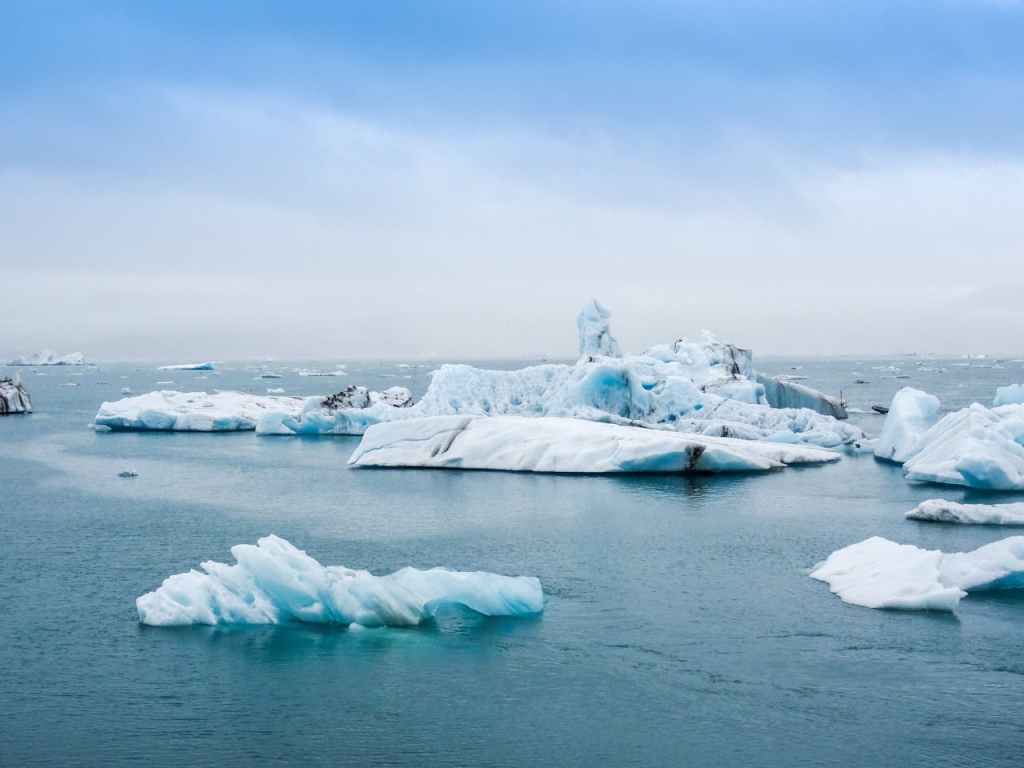
Imagine the first humans gazing at the vast Arctic Ocean—likely Mongolic peoples who reached Russia’s northern coast 30,000 to 40,000 years ago, or even earlier. By at least 14,000 years ago, their descendants crossed the Bering Strait into Alaska. From there, groups fanned south and east across North America, with some arriving in eastern Canada and Greenland around 4,500 years ago. A later wave of Mongolic invaders swept across Arctic Canada to Greenland, supplanting the originals.
Genetic studies point to the Sámi and Karelians of northern Scandinavia and northwestern Russia as today’s most ancient occupants. Linguistics backs this up: They (along with Finns and Estonians) speak Finno-Ugric languages, predating the Germanic (Swedish, Norwegian), Baltic (Latvian, Lithuanian), and Slavic (Russian) Indo-European tongues that arrived later. That’s why Swedes, Norwegians, and Icelanders can somewhat understand each other today, while Sámi and Finnish sound like gibberish to them—and to Russians.
WWII Legacies: Airports Carved from the Ice
World War II left indelible marks on the Arctic. In Keflavik, Iceland, Allies built a major airport and base, housing over 30,000 troops during and after the war—it’s now Iceland’s international gateway. Sondre Stromfjord in Greenland got a similar upgrade, complete with America’s-built road, now the country’s longest; it’s Greenland’s main international airport. Thule Air Base in northern Greenland remains a U.S. military outpost, the northernmost in the world.
Soviet Gulags: Forging Cities in the Deep Freeze
A darker chapter unfolded in the Soviet era. Stalin’s Gulag system deployed millions of prisoners to the frozen frontier, blasting mines, cutting forests, and building roads, bridges, railroads, and factories. This captive labor industrialized remote Siberia, producing iron, coal, and timber on their backs. Survivors often couldn’t return home; instead, exiles and families swelled new factory towns, fueled by Moscow’s subsidies.
Even after Stalin’s death and the Gulag’s end in 1953, subsidies persisted. By the 1980s, gigantic industrial cities dotted Earth’s coldest terrains. Soviet planners’ choice to force-grow metropolises in harsh, isolated cold—linked by overstretched infrastructure—created one of humanity’s most bizarre settlement contrasts. These outposts strained the economy so severely that some blame them for the USSR’s 1991 collapse. Subsidies vanished, and in the 1990s, Siberian cities depopulated rapidly—eastern Siberia’s twelve million residents halved to six million, only now stabilizing in a free-market equilibrium.
West Siberia’s Oil Boom: From Mosquito Swamp to Energy Empire
In 1960, West Siberia was a mosquito-infested void, home only to aboriginal reindeer herders. Then, between 1962 and 1965, four supergiant oil fields flipped the script. Moscow’s planners gambled big: massively develop this permafrost-choked, flood-prone lowland, despite no access, no infrastructure, and decades of unprofitability. They shipped in everything via the Ob’ River—ports, roads, railroads, drilling pads, pipelines.
The bet paid off. Today, the Russian Federation leads global natural gas production and ranks second in oil, thanks to West Siberia. It’s the heart of Russia’s energy giants, including state-owned Gazprom—akin to Silicon Valley for tech, New York for finance, or LA for entertainment.
Peaceful Borders and Ancient Floods
Arctic land borders among the eight northern countries tell a calmer story. Canada-U.S. harmony extends north: Norway-Sweden-Finland ties are among the world’s friendliest, with citizens feeling closer to each other than to southern Europe. The sole tension zigzags 700+ miles through forest, separating Finland from Russia.
Don’t be misled by maps showing Norway, Sweden, and Finland as the “coldest”—their north-south settlements stretch farthest north, warmer thanks to the North Atlantic Current. Siberia’s forced giants, by contrast, defy logic.
Finally, the region’s geology echoes epic drama. At the last ice age’s end, melting glaciers formed colossal freshwater lakes larger than today’s Great Lakes, pooling against the retreating ice sheet in Canada. When pathways opened to the sea, a biblical deluge roared out through Hudson Bay.
Source : The World in 2050: Four Forces Shaping Civilization’s Northern Future by Laurence C. Smith
Goodreads : https://www.goodreads.com/book/show/7816424-the-world-in-2050
Read the Previous Article in the Series :







 Thinking Beyond Science
Leave a comment