Imagine this: I hand you $100 and offer two choices. Option A: a guaranteed $50 gain. Option B: a coin flip where heads nets you $100 more and tails gives nothing. Most people pick A—the sure thing.
Now, suppose I give you $200 instead, with Option A: a guaranteed $50 loss. Option B: the same coin flip, but heads means losing $100 and tails means losing nothing. Suddenly, most switch to B, gambling to avoid the sure loss.
The outcomes are mathematically identical—your final wealth is the same either way. Rational Choice Theory, the bedrock of the “Homo economicus” ideal (that perfectly rational economic human), says we maximize utility by picking indifferently. But we don’t. Loss aversion kicks in: we’re cautious with gains, bold with losses. Emotions trump math, revealing the irrationality baked into our decisions.
This isn’t just human quirkiness. Behavioral economics pioneer Colin Camerer calls the brain “the organ of economic decision,” challenging Homo economicus head-on. “The first time I heard about rational choice theory, I couldn’t keep a straight face,” he says. “There are just so many exceptions.” It presumes unlimited computation, willpower, and self-interest—none of which hold up.
Cracking Market Myths
Take Nash equilibrium: players (or markets) settle where no one benefits from switching strategies unilaterally. Or Pareto optimum: no more gains without someone losing. These assume perfect competition, information, and rationality. Behavioral economists know better—markets wobble because we’re irrational.
Even supply and demand, that self-correcting loop where prices rise with excess demand and fall with surplus until balance, gets messy. It’s like physics or biology’s autocatalytic systems, but human (and primate) biases disrupt the “lawlike” predictability.
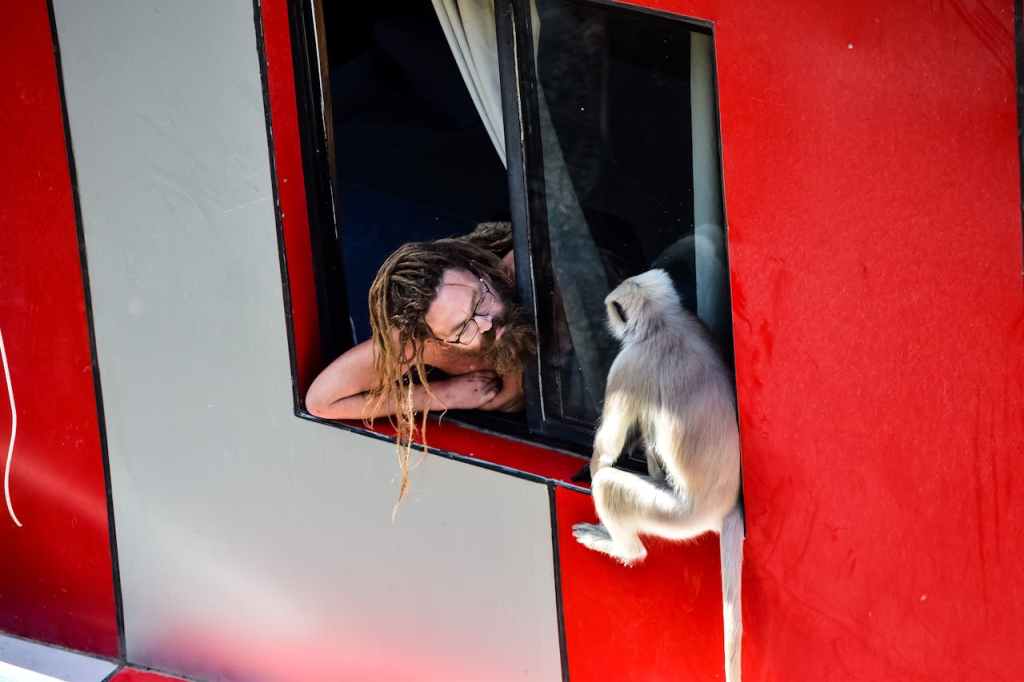
Monkeys prove it. Capuchins show supply-demand sensitivity and loss aversion, just like us. This didn’t evolve separately—it’s from a common ancestor over 10 million years ago, wired into primate brains.
Time, Temptation, and the Lightbulb Dilemma
Consider lightbulbs. Incandescent: $0.75, 1,000 hours, total 10,000-hour cost (with replacements): $59. Compact fluorescent: $2 upfront, 10,000 hours, total cost: $12. Same light, massive savings later.
Buy the cheap one now (save $1.25 immediately) or the efficient one (save $47 eventually)? It hinges on time preference—how we discount future value. Behavioral economics calls these intertemporal choices: trade immediate costs for delayed benefits.
We crave instant gratification unless incentivized otherwise. Hide the temptation (like skipping the dessert menu), and we’re better at waiting. Show it? Impulse wins. As a car salesman might say: don’t ask if they want to buy—ask which one.
Behavioral economists crunch equations to predict this, factoring visibility, incentives, and more. It exposes Homo economicus as a myth, urging economics to embrace our evolved quirks for real-world insight.
Source – The Mind of the Market: Compassionate Apes, Competitive Humans, and Other Tales from Evolutionary Economics by Michael Shermer
Goodreads –https://www.goodreads.com/book/show/1960096.The_Mind_of_the_Market
Read the Previous Article in the Series :






 Thinking Beyond Science
Leave a comment