Advertisers know that constant creativity is required to keep us engaged. Their ads nudge us towards a particular brand of detergent or chips or perfume but if the ads aren’t continually refreshed, we’ll tune them out; they lose their impact.
On the one hand, brains try to save energy by predicting away from the world; on the other hand, they seek the intoxication of surprise. We don’t want to live in an infinite loop, but we also don’t want to be surprised all the time.
Brains seek a balance between exploiting previously land) knowledge and exploring new possibilities. This is always a tricky trade-off.+ Say you’re deciding which restaurant to go to for lunch. Do you stick with your traditional favorite or try something new? If you go for your familiar haunt, you’re exploiting knowledge you’ve gained from past experience.
In the course of developing over eons, brains have achieved an exploration/exploitation trade-off that strikes the balance between flexibility and rigor. We want the world to be predictable, but not too predictable, which is why hairstyles don’t reach an endpoint, nor do bicycles, stadiums, fonts, literature, fashion, movies, kitchens, or cars.
The exploration/exploitation trade-off also explains why our world is so densely populated with skeuomorphs: features that imitate the design of what has come before. Consider that when the iPad was introduced it featured a “wooden” bookshelf with “books” on it – and the programmers went to great lengths to make the “pages” turn when you swiped your finger. Why not simply redefine a book for the digital era? Because that’s not what made customers comfortable; they required a connection to what had come before.
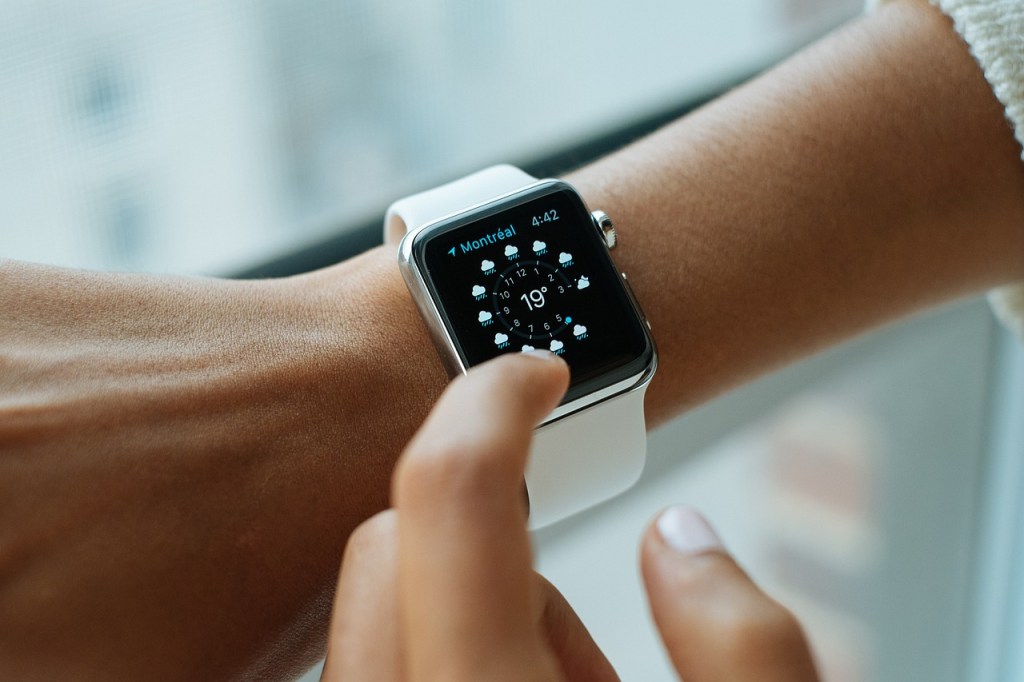
Even as we move from one technology to the next, we establish ties with the old, marking a clear path from what was to what is. On the Apple Watch, the “Digital Crown” looks like the knob used to move the hands and wind the springs on an analog timepiece. In an interview with the New Yorker, designer Jonathan Ive said that he placed the knob slightly off-center to make it “strangely familiar.” If he had centered it, users would have expected it to perform its original function; had he removed it, the watch wouldn’t have looked enough like a watch? Skeuomorphs temper the new with the familiar.
Our smartphones are packed with skeuomorphs. To place a call, we touch an icon of an old phone handset with an extruded earpiece and mouthpiece – a profile that departed the technology landscape long ago.
The camera on your smartphone plays an audio file of a shutter sound, even though digital cameras don’t have mechanical shutters. We delete the zeros and ones of our apps by dragging them to the “trash can.” We save files by clicking on the image of a floppy disk – an artifact that has gone the way of the mastodon. We purchase items online by dropping them into a “shopping cart.” Such ties create a smooth transition from the past to the present. Even our most modern tech is tethered with an umbilical cord to its history.
If you sat down for dinner with a zombie, you would not expect to be impressed with a creative idea. Their behaviors are automatized: they are only running pre-configured routines. That’s why zombies don’t skateboard, write memoirs, launch ships to the moon, or change their hairstyles.
Our neural machinery allows us to have our massive portfolio of instinctual behaviors, from walking to chewing to ducking to digesting. And even as we learn new skills, we tend to streamline them into habits rapidly. When we learn how to ride a bicycle, drive a car, use a spoon, or type on a keyboard, we burn the task into fast pathways in the neural circuitry? The most rapid conduit becomes favored over other solutions, minimizing the brain’s Chance of making an error. Neurons that are not required for that task are no longer triggered.
Rather than a push-button response, the neural chatter is like parliamentary debate. Everyone joins in the discussion. Coalitions form. When a strong consensus emerges, an idea may rise to conscious awareness, but what can feel like a sudden realization actually depends on extensive internal debate.
Mediated (as opposed to automated) behaviors involve thought and foresight: understanding a poem, navigating a difficult conversation with a friend, generating a new solution to a problem. That kind of thinking involves seeking out new paths for innovative ideas.
Humans live inside a competition between automated behavior, which reflects habits, and mediated behavior, which defeats them. We depend on being able to do both. Automated behavior gives us expertise: when the sculptor chisels, the architect builds a model or the scientist conducts an experiment, practiced dexterity helps to make new outcomes possible. If we can’t execute our new ideas, we struggle to bring them to life. But automated behavior can’t innovate. Mediated behavior is how we generate novelty. It is the neurological basis of creativity.
We are drawn to future simulations early in life: pretend play is a universal feature of human development.’ A child’s mind swirls with visions of becoming President, hibernating on the way to Mars, heroically somersaulting during a firefight. Pretend play enables children to envision new possibilities and gain knowledge about their surroundings.
As we grow up, we simulate the future each time we consider alternatives or wonder what might happen if we choose a different path. Whenever we buy a house, pick a college, ponder a potential mate, or invest in the stock market, we accept that most of what we consider may be wrong or may never occur.
Source : The Runaway Species: How Human Creativity Remakes the World by David Eagleman, Anthony Brandt
Goodreads : https://www.goodreads.com/book/show/34146662-the-runaway-species
Read Previous Article : https://thinkingbeyondscience.in/2024/11/13/the-brains-creative-lens-how-familiarity-shapes-perception-and-predictability-fuels-innovation/
Read Next Article : https://thinkingbeyondscience.in/2025/05/17/unleashing-human-creativity-the-power-of-imagination/




 Thinking Beyond Science
Leave a reply to Unleashing Human Creativity: The Power of Imagination – Thinking Beyond Science Cancel reply