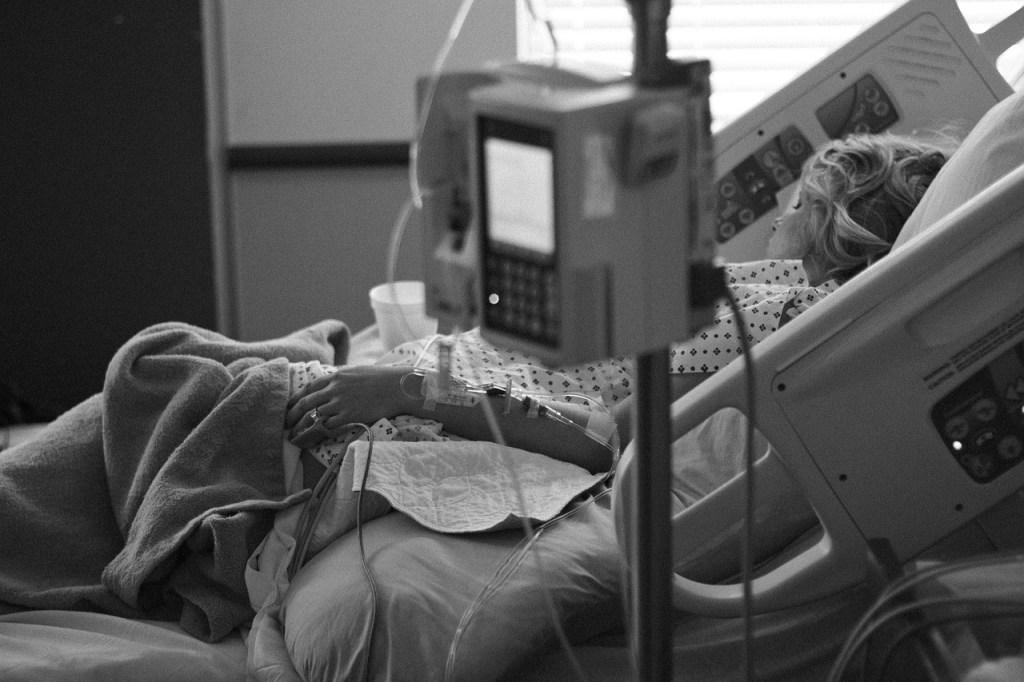
The vigil around a deathbed is a common sight in palliative care. In some families it is peaceful; in some there are rotas and care-for-the-carers as well as care for the dying; in some there is vying for position – most bereaved, most loved, most needed, most forgiven; in many there is laughter, chatter and reminiscence; others are quieter, sadder, more tearful; in some there is only a solitary sitter; occasionally it is we staff who keep the vigil, because our patient has no one else. So I had seen it many times before I had the perspective-changing experience of sitting at the bedside of someone I loved dearly, and would miss greatly, for the first time.
Now that we understand how minutely attentive to detail the watchers are, how active and probing their attention is, how exhausting the responsibility feels, I am a better servant to their needs and questions, and so much more patient with their frequent requests to check for any sign of discomfort or distress. This last vigil is a place of accountability, a dawning realization of the true value of the life that is about to end; a place of watching and listening; a time to contemplate what connects us, and how the approaching separation will change our own lives forever. How intently we serve, who only sit and wait.
Human beings are highly resilient. We adapt to adversity, and find ways to maintain our inner peace as best we can. Often, we use coping patterns that we developed very early in life: if you’ve always put on a brave face, then that becomes your preferred way, and you may find it difficult to understand someone who copes by sharing their distress out loud. Neither you nor the other person is coping better or being braver than the other; one simply finds inner peace by venting, whereas the other’s peace comes from feeling self-contained. If you are a ‘take control and plan the details’ person, it can be tough for both of you if you are sharing a distressing situation with a person who copes by thinking about everything except the challenge ahead: one person’s avoidance is in direct conflict with the other’s need to plan, and this is stressful for both of them. Finding middle ground on which to meet and work together requires sensitivity, tact and patience, and perhaps even the help of a trusted third party.
The strength of the human spirit is astonishing. People all think that they have a limit, beyond which they cannot endure. Their capacity to adapt and to reset their limits has been a constant wonder to me over my decades in working with people living with some of the most challenging illnesses imaginable.
Pressure ulcers are sores that break the skin open, usually where it is squeezed and stretched between a bone on the inside of the body and furniture or clothing on the outside. They can be very painful (think how much a single blister hurts in a tight shoe), and become more likely as a person loses the ability to shift their position on their mattress, and as they have less fat padding their skin.
Denial is an effective psychological mechanism for dealing with distressing situations. By choosing not to believe the bad or dreaded thing is happening, a person can avoid distress completely.
Difficulties may arise as it becomes harder and harder for them to ignore evidence that something is seriously wrong: if they have not accepted any bad news at all, then nor have they made any emotional adjustment for it. If their denial breaks down suddenly, they may become completely overwhelmed by the realisation of how bad things really are. For families, it can be a huge challenge to live alongside someone who is maintaining denial of an unpalatable truth.
People are not limited so much by their illness as by their attitude to it. The illness may present physical challenges, but the emotional challenge is often far more important. Our human spirit may stumble as the path ahead appears too daunting, yet with support and encouragement, our resilience can be re-enabled and used to find creative solutions. We are all individuals, and one person’s plan may not be a good fit for another who, outwardly at least, appears to be in a similar situation. Enabling people to be architects of their own solution is key to respecting their dignity. They are only in a new phase of life; they have not abdicated personhood.
Cystic Fibrosis – This is an inherited condition that gradually damages the lungs, pancreas and digestive system during childhood and teens, often leading to death before the age of thirty. A few patients survive longer thanks to improved management of damaging chest infections, and better remedies for their diabetes and nutrition problems.
Some may survive long-term if they are lucky enough to have a successful lung transplant. Timing of lung transplantation is critical – it is a high-risk procedure, and so should be delayed while the patient can manage a reasonable quality of life, but not to the point that the patient’s deteriorating lungs make them too ill to survive the anesthetic and the surgical procedure. Our hospital palliative care team works closely with the cystic fibrosis team. offering advice to reduce the impact of breathlessness, cough, gut problems and weight loss, whether as palliative measures or tr prepare people to be fit for surgery. We also work psychological with a few patients whose anxiety and panic generate increase breathlessness.
Source : With the End in Mind: Dying, Death, and Wisdom in an Age of Denial by Kathryn Mannix
Goodreads : https://www.goodreads.com/book/show/35099051-with-the-end-in-mind
Read Previous : https://thinkingbeyondscience.in/2024/11/19/facing-the-unspoken-understanding-the-modern-taboo-of-death-and-dying/
Read Next : https://thinkingbeyondscience.in/2025/05/31/the-importance-of-discussing-death/







 Thinking Beyond Science
Leave a reply to The Importance of Discussing Death – Thinking Beyond Science Cancel reply