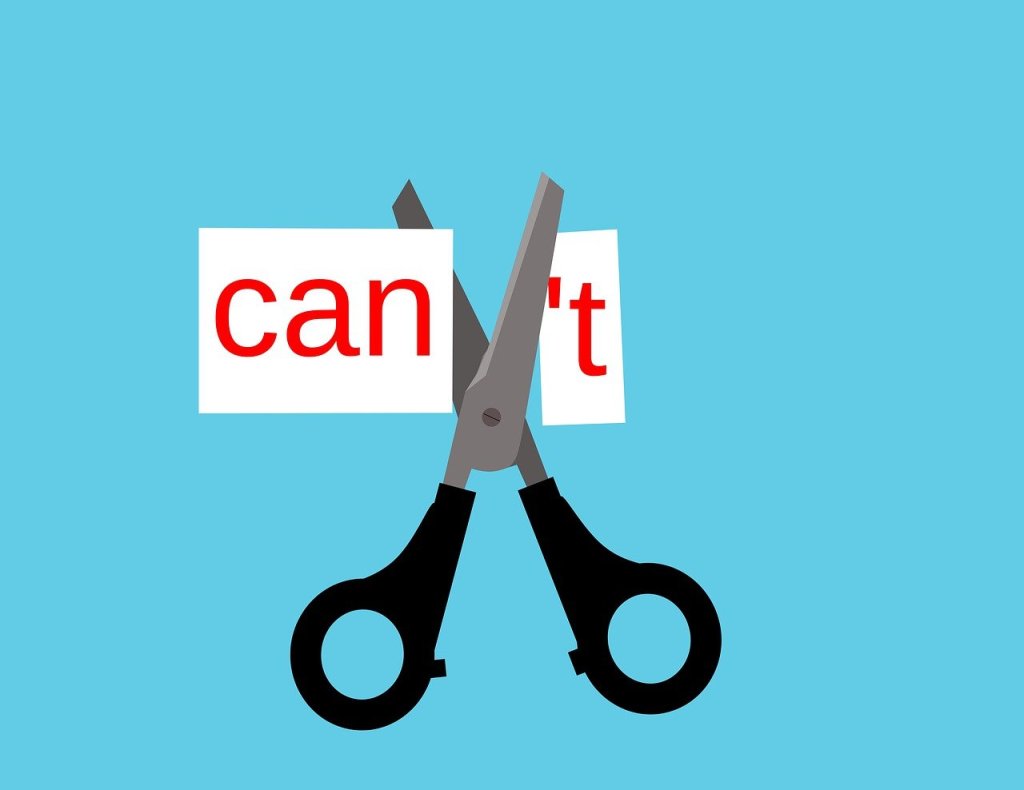
What Makes People Want to Change?
Three things make people want to change. One is that they hurt sufficiently. They have beaten their needs against the same wall so long that they decide they have had enough. They have invested in the same slot machines without a pay-off for so long that they finally are willing either to stop playing or to move on to others. Their migraines hurt. Their ulcers bleed. They are alcoholic. They have hit the bottom. They beg for relief. They want to change.
Another thing that makes people want to change is a slow type of despair called ennui, or boredom. This is what the person has who goes through life saying, ‘So what?” until he finally asks the ultimate big ‘So What?’ He is ready to change.
A third thing that makes people want to change is the sudden discovery that they can.
There are many clues to help identify stimulus and response as Parent, Adult, or Child. These include not only the words used but also the tone of voice, body gestures, and facial expressions. The more skilful we become in picking up these clues, the more data we acquire in Transactional Analysis. We do not have to dig deep into anecdotal material in the past to discover what is recorded in Parent, Adult, and Child. We reveal these aspects in ourselves every day.
Another type of complementary transaction is one between Parent and Child. The husband (Child) is sick, has a fever, and wants attention. The wife (Parent) knows how ill he feels and is willing to mother him. This can go on in a satisfactory way indefinitely as long as the wife is willing to be mothering.
If you own a cruiser, you become an expert navigator be. cause you have acquainted yourself with the consequences of being a poor one. You don’t wait until the storm hits to figure out how to work the radio. If you have a marriage, you become an expert partner because you have acquainted yourself with the consequences of being a poor one. You work out a value system to underlie your marriage, which then serves you when the going gets rough. Then the Adult is prepared-to take over transactions with a question such as, ‘What’s important here?’
The Adult, functioning as a probability estimator, can work out a system of values that encompasses not only the marriage relationship but all relationships. Unlike the Child, it can estimate consequences and postpone gratifications. It can establish new values based on a more thorough examination of the his. torical, philosophical, and religious foundations for values. Unlike the Parent, it is concerned more with the preservation of the individual than with the preservation of the institution. The Adult can consciously commit itself to the position that to be loving is important. The Adult can see more than a parental mandate in the idea it is more blessed to give than to receive.
In summary, a strong Adult is built in the following ways:
- Learn to recognize your Child, its vulnerabilities, its fears, its principal methods of expressing these feelings.
- Learn to recognize your Parent, its admonitions, in-junctions, fixed positions, and principal ways of expressing these admonitions, injunctions, and positions.
- Be sensitive to the Child in others, talk to that Child, stroke that Child, protect that Child, and appreciate its need for creative expression as well as the NoT ok burden it carries about.
- Count to ten, if necessary, in order to give the Adult time to process the data coming into the computer, to sort out Parent and Child from reality.
- When in doubt, leave it out. You can’t be attacked for what you didn’t say.
- Work out a system of values. You can’t make decisions without an ethical framework.
All people are structurally alike in that they all have a Parent, an Adult, and a Child. They differ in two ways: in the content of Parent, Adult, and Child, which is unique to each person, being recordings of those experiences unique to each; and in the working arrangement, or the functioning, of Parent, Adult, and Child.
Consider how difficult it is for a two-year-old boy to under. stand what is going on when mother shifts periodically and totally from one kind of a person to another kind of a person.! number of reasons can account for this kind of change. One is alcoholism. Mother is high’. She cuddles and strokes him and tickles him until he screams. She plays tag with him around the table. She throws him in the air. She claps her hands and laughs hysterically as he swings the cat by the tail. Wheel Life is glorious! Then mother passes out. For hours the little boy is abandoned. He is hungry. He is empty. She is gone. The stroking is gone. How can he get it back? What happened? He doesn’t know. Later she wakes up sick. She can’t stand the sight of him. She pushes him away. He cries and comes to her again. She hits him. What happened? What did he do? It had felt so good. Now it’s so bad. He screams himself to sleep.
Tomorrow comes. Mother is high again. Here we go. Last night it was bad. Now it’s good again. And of course it will get bad again. I don’t know why, but in time, everything will change. It’s terribly good (manic) and terribly bad (depressive). Terrible describes both states because of the experienced reality that change will come suddenly, totally, and unpredictably.
Source : I am OK-you are OK by Thomas A. Harris
Goodreads : https://www.goodreads.com/book/show/150265240-i-am-ok-you-are-ok
Read Previous Article : https://thinkingbeyondscience.in/2024/11/25/the-dual-nature-of-human-behavior-exploring-transactions-the-parent-and-the-child/
Read Next Article : https://thinkingbeyondscience.in/2025/06/16/navigating-complexity-in-modern-family-relationships/





 Thinking Beyond Science
Leave a reply to Navigating Complexity in Modern Family Relationships – Thinking Beyond Science Cancel reply