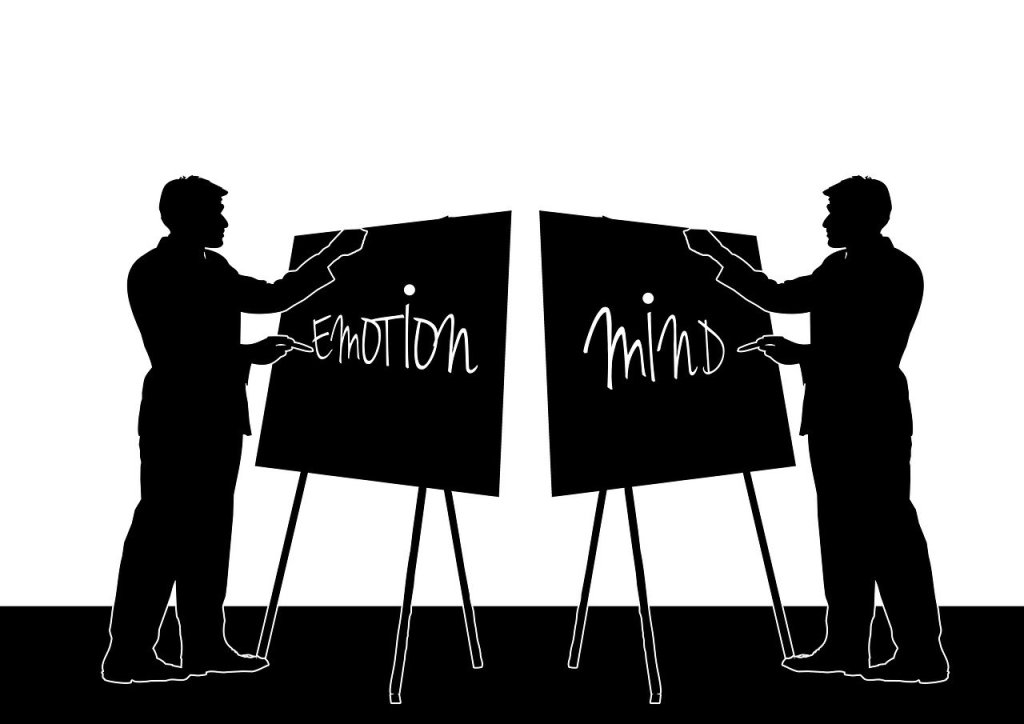
We expend some mental energy in random thoughts and in monitoring what goes on around us even when our mind does nothing in particular, but there is little strain. Unless we are in a situation that makes us unusually wary or self-conscious, monitoring what happens in the environment or inside our head demands little effort. We make many small decisions as we drive our car, absorb some information as we read the newspaper, and conduct routine exchanges of Pleasantries with a spouse or a colleague, all with little effort and no strain. Just like a stroll.
Accelerating beyond my strolling speed completely changes the experience of walking, because the transition to a faster walk brings about a sharp deterioration in my ability to think coherently. As I speed up, my attention is drawn with increasing frequency to the experience of walking and to the deliberate maintenance of the faster pace. My ability to bring a train of thought to a conclusion is impaired accordingly.
People who are cognitively busy are also more likely to make selfish choices, use sexist language, and make superficial judgments in social situ-ations. Memorizing and repeating digits loosens the hold of System 2 on behavior, but of course cognitive load is not the only cause of weakened self-control. A few drinks have the same effect, as does a sleepless night.
The self-control of morning people is impaired at night; the reverse is true of night people. Too much concern about how well one is doing in a task sometimes disrupts performance by loading short-term memory with pointless anxious thoughts. The conclusion is straightforward: self-control Requires attention and effort.
The nervous system consumes more glucose than most other parts of the body, and effortful mental activity appears to be especially expensive in the currency of glucose. When we are actively involved in difficult cognitive reasoning or engaged in a task that requires self-control, our blood glucose level drops.
The various causes of ease or strain have interchangeable effects. When we are in a state of cognitive ease, we are probably in a good mood, like what we see, believe what we hear, trust our intuitions, and feel that the current situation is comfortably familiar. We are also likely to be relatively casual and superficial in our thinking. When we feel strained, we are more likely to be vigilant and suspicious, invest more effort in what we are doing, feel less comfortable, and make fewer errors, but we also are less intuitive and less creative than usual.
A happy mood loosens the control of System 2 over performance: when in a good mood, people become more intuitive and more creative but also less vigilant and more prone to logical errors.
System 2 receives questions or generates them: in either case it directs attention and searches memory to find the answers. System 1 operates differently. It continuously monitors what is going on outside and inside the mind, and continuously generates assessments of various aspects of the situation without specific intention and with little or no effort. These basic assessments play an important role in intuitive judgment, because they are easily substituted for more difficult questions–this is the essential idea of the heuristics and biases approach.
Todorov has found that people judge competence by combining the two dimensions of strength and trustworthiness. The faces that exude competence combine a strong chin with a slight confident-appearing smile. There is no evidence that these facial features actually predict how well politicians will perform in office. But studies of the brain’s response to winning and losing candidates show that we are biologically predisposed to reject candidates who lack the attributes we value- in this research, losers evoked stronger indications of (negative) emotional response.
Our political preference determines the arguments that we find compelling. If we like the current health policy, we believe its benefits are substantial and its costs more manageable than the costs of alternatives. If we are a hawk in our attitude toward other nations, we probably think they are relatively weak and likely to submit to our country’s will. If we are a dove, we probably think they are strong and will not be easily coerced. Our emotional attitude to such things as irradiated food, red meat, nuclear power, tattoos, or motorcycles drives our beliefs about their benefits and their risks. If we dislike any of these things, we probably believe that its risks are high and its benefits negligible.
A dramatic event temporarily increases the availability of its category. A plane crash that attracts media coverage will temporarily alter our feelings about the safety of flying. Accidents are on our mind, for a while, after we see a car burning at the side of the road, and the world is for a while a more dangerous place.
Personal experiences, pictures, and vivid examples are more available than incidents that happened to others, or mere words, or statistics. A judicial error that affects we will undermine our faith in the justice system more than a similar incident we read about in a newspaper.
The answer is that in fact no complex reasoning is needed. Among the basic features of System 1 is its ability to set expectations and to be surprised when these expectations are violated. The system also retrieves possible causes of a surprise, usually by finding a possible cause among recent surprises. Furthermore, System 2 can reset the expectations of System 1 on the fly, so that an event that would normally be surprising is now almost normal. Suppose we are told that the three-year-old boy who lives next door frequently wears a top hat in his stroller. We will be far less surprised when we actually see him with his top hat than we would have been without the warning.
Source : Thinking, Fast and Slow by Daniel Kahneman
Goodreads : https://www.goodreads.com/book/show/11468377-thinking-fast-and-slow
Read Previous Article : https://thinkingbeyondscience.in/2024/12/05/the-two-systems-of-thinking-intuition/
Read Next Article : https://thinkingbeyondscience.in/2025/06/20/how-media-creates-perception-of-risk/






 Thinking Beyond Science
Leave a comment