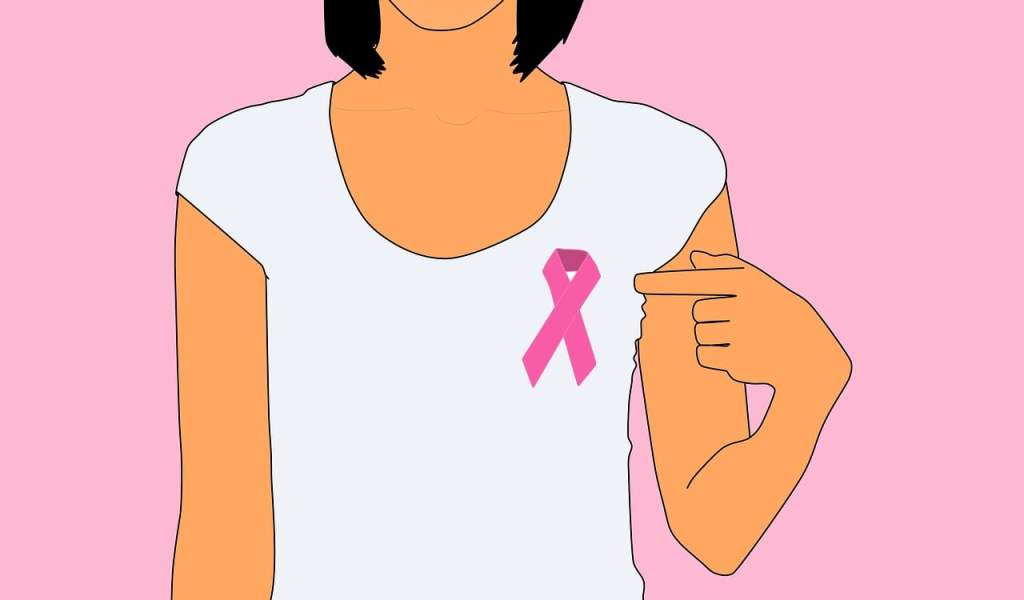
Cancer is a dynamic process that’s happening, and it’s happening far from the confines of a static piece of DNA. Now, a specific mutation from a genome may help explain why it started. For instance, one of the exceptional genetic-test successes has been in breast cancer, which has found BRCA1 and 2, specific genes that are associated with a high risk for breast cancer. Mutations in this gene are more common in Ashkenazi Jews, but it’s important to understand that a mutation in BRCA1 and BRCA2 doesn’t cause breast cancer. They are permissive for further mutations that cause the disease. Women with the inherited BRCA1/2 mutation are born with the mutation they inherit it from one of their parents. But they aren’t born with breast cancer.
There’s a genetic vulnerability to cancer, but the cancer itself isn’t inherited. The person merely inherits a predisposition; those who have the gene are more likely to develop cancer. What the BRCA1 and 2 genes do, probably, is interrupt the conversation taking place in your body to repair broken DNA. But not everyone who has the BRA genes gets diagnosed with breast cancer. This is because, much in the way the body has several pathways leading to cancer, it also has several pathways to repair DNA.
Keep in mind, too, that the majority of women who suffer from breast cancer have completely intact BRA genes, so clearly there’s more at play here than genomics.
Cancer is a symptom of the breaking down of the conversation that’s going on within and between the cells. Somehow the cells are deciding to divide when they shouldn’t, not telling each other to die, or telling each other to make blood vessels when they shouldn’t, or telling each other lies. Somehow, all the regulation that is supposed to happen in this conversation is broken.
When we see a whole bunch of cells starting to divide uncontrollably in an area, we call that cancer, and depending on the body part in which it happens, we’ll call it lung cancer or brain cancer.
The average cancer has more than one hundred mutations in coding genes when it’s first diagnosed.
The number of mutations shoots up exponentially as a cancer patient is treated with drugs such as chemotherapy, which inherently causes more mutations. One of the hallmarks of cancer is unstable DNA, so when chemotherapy drugs bind to DNA, they can cause cancer just as radiation can cause cancer by mutating the genome. This helps explain why survivors of breast cancer, for instance, can suffer from leukemia later in life due to the chemotherapy they received to cure their breast cancer. They made a trade of one illness for another but gained more years of quality life in the interim.
We tend to think of proteins in terms of diet and nutrition; they are one of the three principal constituents of food (alongside fats and carbohydrates) that are known as macronutrients important to our health. But there’s much more to the definition of proteins. They are essential parts of our bodies, and they participate in virtually every process within cells, including how cells talk to one another and orchestrate biological events that feed cycles of health or illness.
Our DNA is static, but our proteins are dynamic. They change in your body every minute, depending on what’s going on internally. I can’t tell from looking at your DNA if you’ve just had a glass of wine, how well you slept last night, when you last had a meal, or if you are under a lot of stress. But your proteins, on the other hand, will tell that story. They will reveal information about you that you cannot find elsewhere in your body.
Cancer inspires fear not only because it’s synonymous with a long, painful, and grievous affliction that rarely has a cure, but also because it’s so stealthy, artful, unfathomable, and inherently baffing. Naturally, we don’t like things that we cannot comprehend well or control. Perhaps that’s why it can be equally as hard to grasp that the body is a complicated, and often mysterious, being. We don’t want to admit that it’s perplexing beyond modern comprehension, and that we may never be able to fully understand this body of ours the way we can understand English or how to ride a bicycle.
Source : The End of Illness by David B. Agus
Goodreads : https://www.goodreads.com/book/show/12750840-the-end-of-illness
Read Previous Article : https://thinkingbeyondscience.in/2025/01/20/understanding-cancer-the-evolution-of-cells/
Read the Next Article in the Series :







 Thinking Beyond Science
Leave a reply to Understanding Cancer: The Evolution of Cells – Thinking Beyond Science Cancel reply