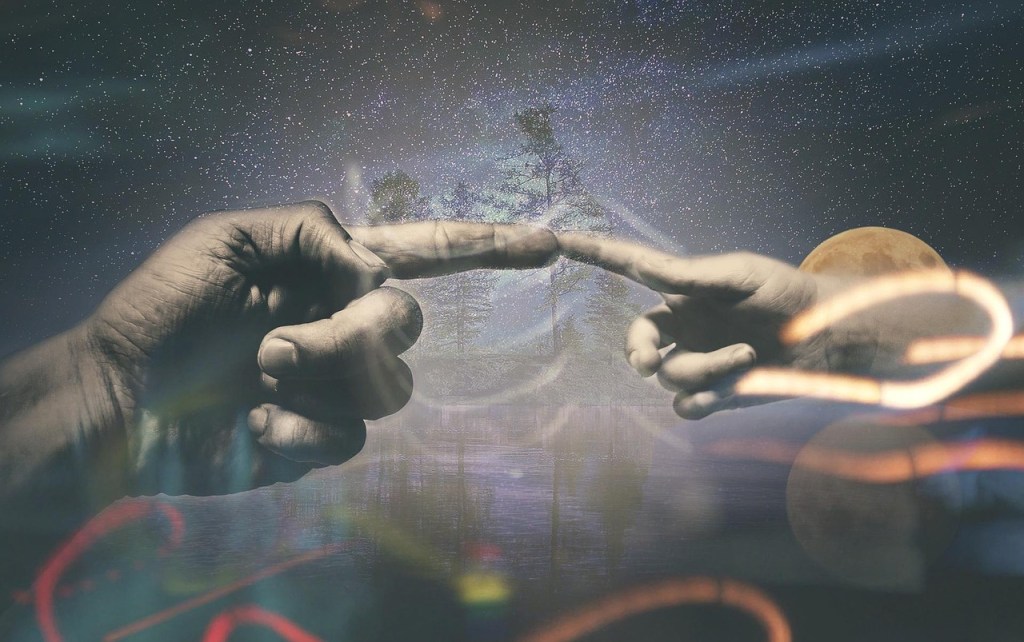
Thinking about what ifs is so rooted in our daily experience that its easy to overlook what an imaginative exercise it is. We endlessly speculate on what might have been, and language is designed to make it easy for us to download our simulations to one another.” If you had come to the party, you would have had fun. If you’d taken this job, you’d be rich by now – but unhappy. If the manager had swapped pitchers, the team would have won the game. Hope is a form of creative speculation: we imagine the world as we wish it to be rather than as it is. Without realizing it, we spend a great portion of our lives in the realm of the hypothetical!
Even the most committed couch potato among us wouldn’t eat his own brain, and this is because humans don’t have a settling point. Our constant itch to combat routine makes creativity a biological mandate.
The innovative drive lives in every human brain, and the resulting war against the repetitive is what powers the colossal changes that distinguish one generation from the next, one decade from the next, one year from the next. The drive to create the new is part of our biological make-up. We build cultures by the hundreds and new stories by the millions. We surround ourselves with things that have never existed before, while pigs and llamas and goldfish do not.
Creativity is just connecting things. When you ask creative people how they did something, they feel a little guilty because they didn’t really do it. They just saw something. It seemed obvious to them after a while; that’s because they were able to connect experiences they’ve had and synthesize new things.
Human creativity does not emerge from a vacuum. We draw on our experience and the raw materials around us to refashion the world. Knowing where we’ve been, and where we are, points the way to the next big industries.
Our innate cognitive software, multiplied by the massive population of Homo sapiens, has produced a society with increasingly faster innovation, one that feeds upon its latest ideas. Eleven millennia transpired between the Agricultural Revolution and the Industrial Revolution. Then it only took a hundred and twenty years to get from the Industrial Revolution to the light bulb. Then merely ninety years until the moon landing From there it was only twenty-two years until the World Wide Web, and a mere nine years later the human genome was fully sequenced.
Bending, breaking and blending – the three Bs – are a way of capturing the brain operations that underlie innovative thinking. Alone or in combination, these mental operations allow humans to get from the IBM Simon to an iPhone, or from native artifacts to the birth of modern art.
Human creativity emerges from this mechanism. We bend, break and blend everything we observe, and these tools allow us to extrapolate far from the reality around us. Humans are terrible at retaining precise, detailed information, but we have just the right design to create alternative worlds.
Our versatility in applying these creative strategies is a great asset, because a mind-boggling variety can result from compounding a limited number of options. Think of what nature is able to make by rearranging DNA: plants and fish that live in the deepest recesses of the ocean, animals that graze and prowl on land, birds that soar through the sky, organisms that thrive in hot or cold climates, at high or low altitude, in rainforests or the desert – all created from different combinations of the same four nucleotides.
Our brains interpose more neurons in areas between sensory input and motor output, allowing for more abstract concepts and more pathways through the circuitry. What’s more, our exceptional sociability compels humans to constantly interact and share ideas, with the result that everyone impregnates everyone else with their mental seeds. The miracle of human creativity is not that new ideas appear out of thin air, but that we devote so much brain real estate to developing them.
Your brain is running its creative software under the hood all the You brain is running is creative software under the hood all the time. Every time you exaggerate, tell a lie, make a pun, create a new dish from leftovers, surprise your partner with a gift, plan a beach vacation or think about a relationship that might have been, you’re digesting and rebuilding memories and sensations that you’ve absorbed before.
Neanderthals were our close genetic cousins, differing from us in about one in ten genes. They too used tools, buried their dead and built fires. Although they were bigger and stronger than us, our own ancestors vanquished them: the last Neanderthals were wiped out about 35,000-50,000 years ago.
Because of the way that brains continuously bend their inputs, language evolves. Human communication has changed built into its DNA: as a result, today’s dictionaries look very little like those of five hundred years ago. Language meets the needs for conversation and consciousness not just because it is referential, but also because it is mutable – and that’s what makes it such a powerful vehicle for transmitting new ideas. Thanks to the creative possibilities of language, what we can say keeps pace with what we need to say.
Source : The Runaway Species: How Human Creativity Remakes the World by David Eagleman, Anthony Brandt
Goodreads : https://www.goodreads.com/book/show/34146662-the-runaway-species
Read Previous Article : https://thinkingbeyondscience.in/2025/02/01/how-familiarity-shapes-our-digital-experiences/
Read the Previous Article in the Series :



 Thinking Beyond Science
Leave a reply to How Familiarity Shapes Our Digital Experiences – Thinking Beyond Science Cancel reply