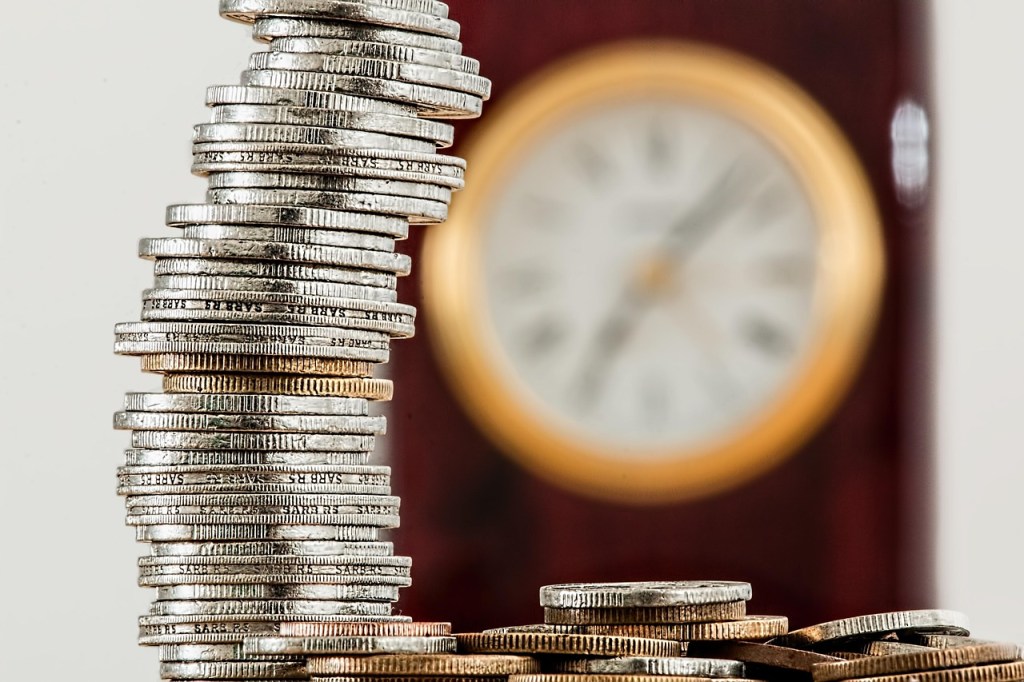
The environment is the designspace of evolution. The market is the designspace of economics. Just as nature selects the variation best suited to survive in a particular environment, so too do people select the goods and services that are best suited to meet their unique needs and desires in a particular market. Note that in neither evolution nor economics is there a top-down designer to oversee the entire system. In life, no one is “selecting” organisms for survival or extinction, in the benign sense of animal breeders or in the malignant sense of Nazi doctors. Evolution is unconscious and nonprescient—it cannot look forward to anticipate what changes are going to be needed for survival.
For example, studies show that Internet airfares change thousands of times an hour as people search for the best price they can find to reach their destinations. Airlines have sophisticated software programs that adjust the prices according to supply and demand for particular routes, the number of seats available at any given moment, and other variables that go into what has become known as “dynamic pricing.” Imagine a centralized bureaucratic airline price committee meeting each morning to work out how much it is going to cost someone to fly, say, from Greens-boro, North Carolina, to Wichita, Kansas, on each of a dozen different airline carriers, factoring in not only the real-time supply and demand parameters and number of available seats, but also the time of day, type of aircraft, class of travel, cost of aviation fuel, number of frequent flyer mileage seats already taken, discount coupons, and dozens of other vari-ables, and doing so for hundreds of thousands of people. It is not an impossible feat to attempt, and planned economies have tried to do it, but like the proverbial bipedal dog, it is exceedingly rare, clumsy, and painfully humorous to watch. Unfortunately for those forced to live in planned economies in the twentieth century, the economic disasters that were the inevitable result were neither rare nor humorous.
Because the first ninety thousand years of our history were spent as hunter-gatherers living in small bands of a few dozen to a few hundred people, we evolved a psychology not always well equipped to reason our way around the modern world. What may seem like irrational behavior today may actually have been rational a hundred thousand years ago. Without an evolutionary perspective, the assumptions of Homo econo-micus make no sense. Take economic profit versus psychological fairness as an example.
It is a myth that evolution is driven solely by “selfish genes” and that organisms are exclusively greedy, self-centered, and competitive, it is a myth that the economy is driven exclusively by selfish intentions, and that people are exclusively greedy, self-centered, and competitive. The fact is, we are both selfish and selfless, cooperative and competitive, peaceful and bellicose, prosocial and antisocial. There exist in both life and economies mutual struggle and mutual aid. In the main, however, the balance in our nature is heavily on the side of good over evil. For every random act of violence that makes the evening news, there are ten thousand nonrandom acts of kindness that go unrecorded every day. Markets are moral, and modern economies are founded on our virtuous nature. If this were not the case, market capitalism would have imploded long ago.
For both within-group and between-group interactions, we are greatly shaped by our perceptions of others, especially our perception of what others think of us; that is, we care about our reputation and status. This is why reputation metrics have arisen so quickly on the Internet as a self-organized emergent property of trust. Ratings of sellers’ reputations on eBay, rankings of the quality of reviewers’ assessments of books on Amazon, and the quality and quantity of connections between users as a measure of reputation in social and professional networking sites such as MySpace, Facebook, and LinkedIn are just a few examples of the need for trust in exchanges of any kind.
In evolutionary timeline there is an economic transition from the equal distribution of economic wealth among bands to the emergence of hierarchical wealth as a token of status and power among tribes; egalitarianism falls apart as b
Thus, in the modern world, a tension arises between our selfish desire to gain greater wealth and our social desire for equality (or at least that no one should be inordinately unequal either too rich or too poor). In monstrously large modern states we have both abject poverty and unimaginable wealth, which causes considerable consternation. In most nations this translates into political policy to raise the poor and lower the rich, because during our evolutionary tenure we lived in a zero-sum (win-lose) world, in which one person’s gain meant another person’s loss. This is why reciprocity and food sharing are so important to hunter-gatherer people, and why they evolved customs and mores to enforce the sharing of the products of communal efforts at hunting and gathering bands and tribes coalesce into chiefdoms and states.
Because humans evolved in small groups of a few dozen to a few hundred individuals in hunter-gatherer communities, in which everyone was either genetically related or knew one another intimately, most resources were shared, wealth accumulation was almost unheard of, and excessive greed and avarice were punished. Thus we naturally respond to a free market system in which conspicuous wealth is paraded as a sign of success with envy and anger, and the expectation is that someone or something more powerful than those greedy individuals should implement corrective action. Call it evolutionary egalitarianism. Further, throughout most of the history of civilization, economic inequalities were not the result of natural differences in drive and talent between members of a society equally free to pursue their right to prosperity; instead, a handful of chiefs, kings, nobles, and priests exploited an unfair and rigged social system to their personal benefit and at the cost of impoverishing the masses.
Our natural response is to perceive such inequalities as ill-gotten gains and to demand controls from the top down to limit the amount of wealth accumulated by any one individual. Whenever anyone says “They should do something about it,” the they that is invoked is inevitably the social institution with the most power—in our case, the government.
Source – The Mind of the Market: Compassionate Apes, Competitive Humans, and Other Tales from Evolutionary Economics by Michael Shermer
Goodreads – https://www.goodreads.com/book/show/1960096.The_Mind_of_the_Market
Read Previous Article : https://thinkingbeyondscience.in/2025/02/03/understanding-evolutionary-economics/
Read the Next Article in the Series :







 Thinking Beyond Science
Leave a reply to Understanding Evolutionary Economics – Thinking Beyond Science Cancel reply