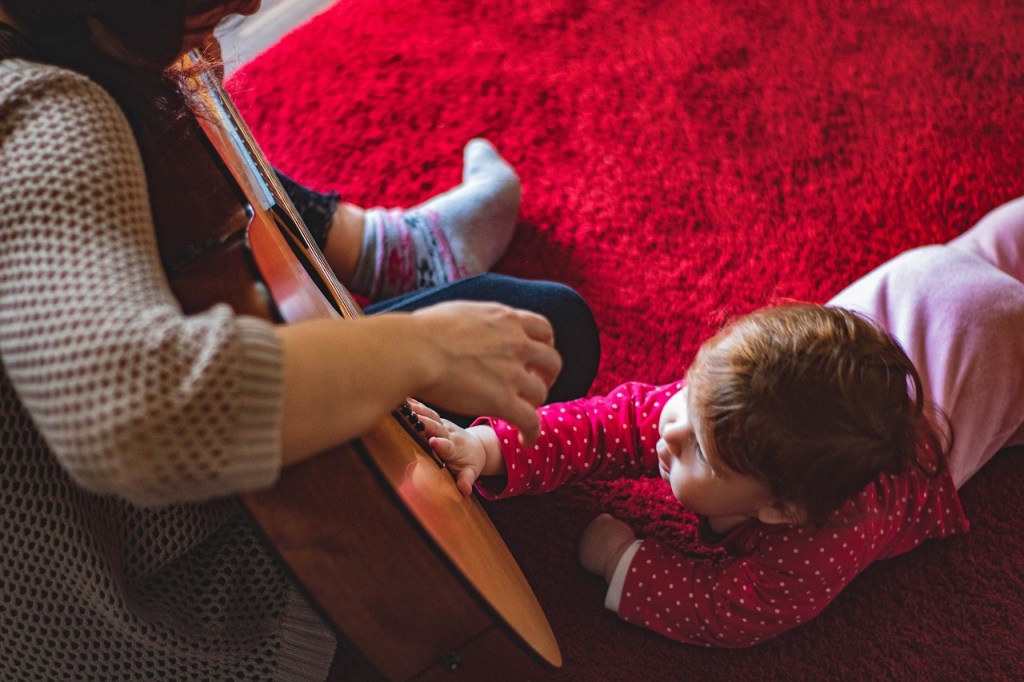
There is a whole field of the science of child development and attachment backing up this view—and the new findings in the field of neuroplasticity support the perspective that parents can directly shape the unfolding growth of their child’s brain according to what experiences they offer. For example, hours of screen time playing video games, watching television, texting will wire the brain in certain ways. Educational activities, sports, and music will wire it in other ways. Spending time with family and friends and learning about relationships, especially with face-to-face interactions, will wire it in yet other ways. Everything that happens to us affects the way the brain develops.
This wire-and-rewire process is what integration is all about: giving our children experiences to create connections between different parts of the brain. When these parts collaborate, they create and reinforce the integrative fibers that link different parts of the brain. As a result, they are connected in more powerful ways and can work together even more harmoniously. Just as individual singers in a choir can weave their distinct voices into a harmony that would be impossible for any one person to create, an integrated brain is capable of doing much more than its individual parts could accomplish alone.
That’s what we want to do for each of our kids: help their brain become more integrated so they can use their mental resources to full capacity.
Sibling rivalry is like so many other issues that make parenting difficult— tantrums, disobedience, homework bat-tles, discipline matters, and so on. As we’ll explain in the coming chapters, these everyday parenting challenges result from a lack of integration within your child’s brain. The reason her brain isn’t always capable of integration is simple: it hasn’t had time to develop. In fact, it’s got a long way to go, since a person’s brain isn’t considered fully developed until she reaches her mid-twenties. So that’s the bad news: you have to wait for your child’s brain to develop. That’s right. No matter how brilliant you think your preschooler is, she does not have the brain of a ten-year-old, and won’t for several years. The rate of brain maturation is largely influenced by the genes we inherit. But the degree of integration may be exactly what we can influence in our day-to-day parenting.
The good news is that by using everyday moments, you can influence how well your child’s brain grows toward integration. First, you can develop the diverse elements of your child’s brain by offering opportunities to exercise them. Second, you can facilitate integration so that the separate parts become better connected and work together in powerful ways. This isn’t making your children grow up more quickly-it’s simply helping them develop the many parts of themselves and integrate them. We’re also not talking about wearing yourself (and your kids) out by frantically trying to fill every experience with significance and meaning. We’re talking about simply being present with your children so you can help them become better integrated. As a result, they will thrive emotionally, intellectually, and socially.
An integrated brain results in improved decision making, better control of body and emotions, fuller self-understanding, stronger relationships, and success in school. And it all begins with the experiences parents and other caregivers provide, which lay the groundwork for integration and mental health.
Imagine a peaceful river running through the countryside. That’s your river of well-being. Whenever you’re in the water, peacefully floating along in your canoe, you feel like you’re generally in a good relationship with the world around you. You have a clear understanding of yourself, other people, and your life. You can be flexible and adjust when situations change. You’re stable and at peace.
Sometimes, though, as you float along, you veer too close to one of the river’s two banks. This causes different problems, depending on which bank you approach. One bank represents chaos, where you feel out of control. Instead of floating in the peaceful river, you are caught up in the pull of tumultuous rapids, and confusion and turmoil rule the day. You need to move away from the bank of chaos and get back into the gentle flow of the river. But don’t go too far, because the other bank presents its own dangers. It’s the bank of rigidity, which is the opposite of chaos. As opposed to being out of control, rigidity is when you are imposing control on everything and everyone around you. You become completely unwilling to adapt, compromise, or negotiate. Near the bank of rigidity, the water smells stagnant, and reeds and tree branches prevent your canoe from flowing in the river of well-being. So one extreme is chaos, where there’s a total lack of control.
The other extreme is rigidity, where there’s too much control, leading to a lack of flexibility and adaptability. We all move back and forth between these two banks as we go through our days— especially as we’re trying to survive parenting. When we’re closest to the banks of chaos or rigidity, we’re farthest from mental and emotional health. The longer we can avoid either bank, the more time we spend enjoying the river of well-being. Much of our lives as adults can be seen as moving along these paths- sometimes in the harmony of the flow of well-being, but sometimes in chaos, in rigidity, or zigzagging back and forth between the two. Harmony emerges from integration. Chaos and rigidity arise when integration is blocked. All of this applies to our kids as well. They have their own little canoes, and they float down their own river of well-being.
Many of the challenges we face as parents result from the times when our kids aren’t in the flow, when they’re either too chaotic or too rigid. Your three-year-old won’t share his toy boat at the park? Rigidity. He erupts into crying, yelling, and throwing sand when his new friend takes the boat away? Chaos. What you can do is help guide your child back into the flow of the river, into a harmonious state that avoids both chaos and rigidity.
The same goes for older children. Your normally easygoing fifth-grader is crying hysterically because she didn’t get the solo she wanted in the school play. She refuses to calm down and repeatedly tells you that she has the best voice in her grade. She’s actually zigzagging back and forth between the banks of chaos and rigidity, as her emotions have clearly taken control of her logic. As a result, she stubbornly refuses to acknowledge that someone else might be just as talented. You can guide her back into the flow of well-being so that she can achieve better balance within herself and move into a more integrated state.
Source : The Whole-Brain Child: Revolutionary Strategies to Nurture Your Child’s Developing Mind by Daniel J. Siegel, Tina Payne Bryson
Goodreads : https://www.goodreads.com/book/show/10353369-the-whole-brain-child
Read Previous Article : https://thinkingbeyondscience.in/2025/02/11/how-brain-integration-affects-your-childs-behavior/







 Thinking Beyond Science
Leave a comment