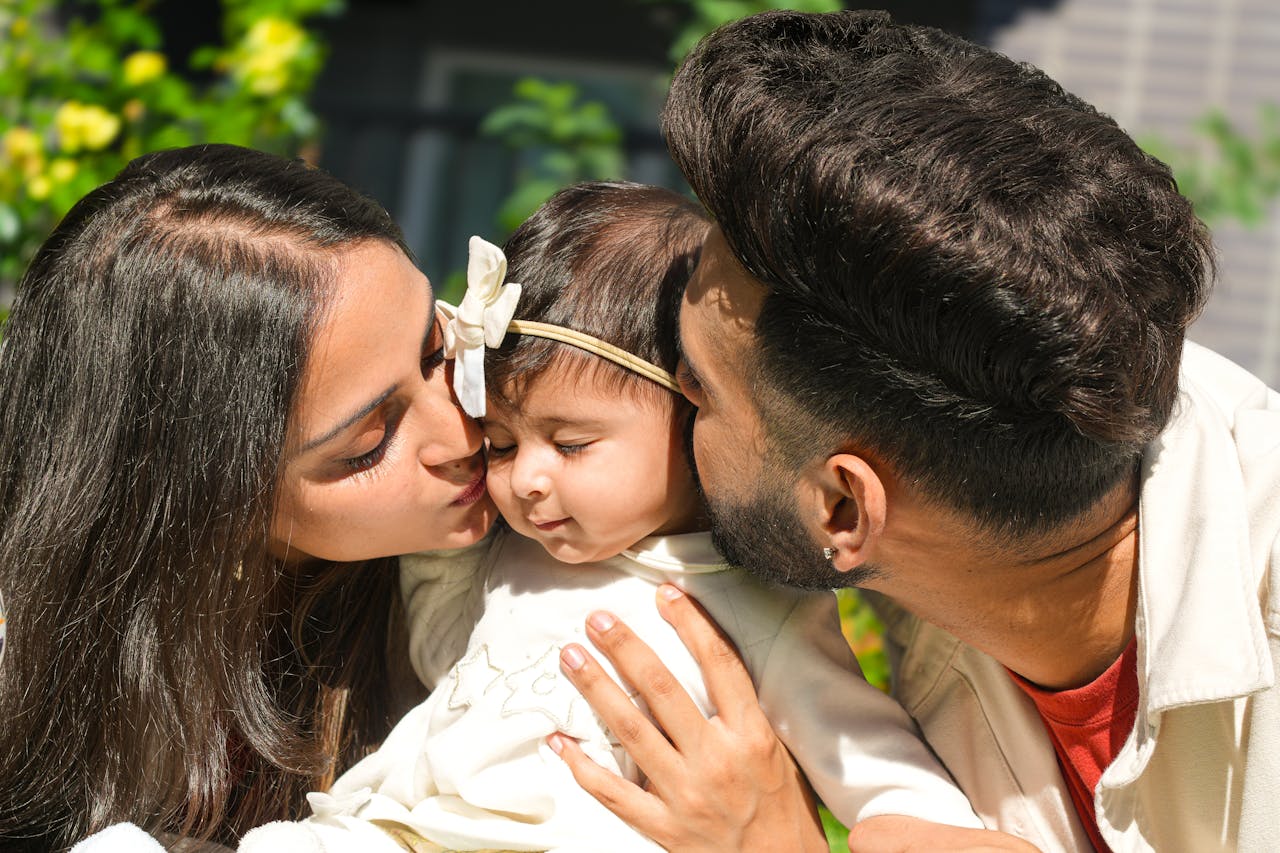
An Indian father’s love isn’t something that’s easily translatable to words. Our urban Indian cultural mainstream isn’t a very verbose setting, unlike the white American TV sitcoms that so many of us have grown up watching. Even though young Indian people are increasingly seeking out the language for expressing emotional care and sorting out conflict, this isn’t really a society where we’ve been taught to sit at dinner tables and express, dissect, or even process our innermost feelings for each other—especially when those feelings are about our own biological family.
Familial love here is assumed, expected, and required—and demonstrated in non-verbal ways in most normative Indian families. Many generations of Indians accept this unspoken rule without challenge. It’s considered common knowledge that you aren’t supposed to question what is culturally assumed to be obviously given to you by your family. You often hear statements like, “Of course your mother loves you—how can you even doubt that?”
Parenting as a Lifelong Commitment
Parenting in India, unlike its white-Western counterpart, is a socially approved twenty-five-year project. Culturally, Indian parents face immense social ostracization, gossip, classism, and caste-based oppression if their children don’t turn out successful in socially approved ways. Here, parents don’t expect children to move out at eighteen and see them only once or twice a year. Nor is there an expectation that adult children would never take a loan from their families again.
Instead, Indian parents—and particularly fathers—express love through lifelong actions and cumulative acts of service, even for legal adults. While buying school textbooks and financing expenses for kids under eighteen is universal, in India this extends to fathers buying college textbooks, a child’s first mobile phone, computer, or even car. They might file their children’s first tax returns, manage investments and bank accounts, and even find suitable marriage partners. A simple “I love you and I’m here for you” isn’t common—our culture lacks a verbal orientation for emotional expression. Every culture has its normative “love language,” and ours doesn’t feature words of affirmation… yet.
Many adult Indian children crave hearing, “I love you, I’m proud of you, and I’m here for you.” Adults often want vulnerability from parents, like “Beta, I’m struggling. I’m sad I won’t be able to help you with money this month.” But such honesty creates anxiety, discomfort, and shame across generations.
The Challenge of Emotional Honesty
Practicing emotional honesty in a society that encourages secrecy, shame, and living double lives—for fear of what others will say—is a tremendous challenge. Family-oriented Indians who identify as queer and aren’t part of the online generation face this head-on, risking ostracization with little support. Intergenerational bonds are complex, but for queer individuals in a society steeped in unaddressed sexual shame, it adds relational burdens. Indian family systems need more legal, social, and systemic support for long-term well-being.
Learning to “Adjust” and Its Hidden Costs
A large part of growing up Indian is learning to “adjust.” From childhood, we’re taught life isn’t an individual journey but a collective, family-oriented one, where we live with different personalities. We avoid speaking directly about our needs, especially to elders, to not inconvenience or hurt them.
This teaches compromise but often prevents asking for what we truly need for a healthy life. Many live dual lives: one for families, performing sociocultural roles; another for ourselves, living authentically. Urban Indian socialization says inner work is only for crises—therapy is stigmatized, and couples’ therapy is pathologized as endless lecturing to “fix” problems.
Unrealistic Views of Dating and Marriage
Our cultural conditioning harms us by holding unrealistic views of dating and marriage. Despite stances against breakup or divorce, we aren’t taught to survive or thrive long-term with someone. Kids are discouraged from opposite-gender friendships; post-puberty, dating distracts from studies and is only for marriage-seriousness. Schools punish young couples, creating poor dating skills, low awareness of other genders, and unrealistic expectations.
Then, families push marriage—a lifelong commitment—with no preparation. Relationships have a learning curve; some adapt quickly, others need support. Expecting it to be “naturally easy” ignores commitment’s reality. Safe relationships hold space for feelings, triggers, and growth, turning buried issues conscious. Conflict reveals what’s brewing underneath.
Beyond Chemistry: Sex, Attachment, and Mature Love
Good chemistry doesn’t guarantee fulfilling sex will fix emotional loneliness or trauma—sex can’t rescue us. It’s a practice; chemistry is just one ingredient. Like cooking, flavor comes from the process. We’re not taught sex as something to learn, especially with trauma, leading to unrealistic expectations.
Casual sex, polyamory, asexuality, or celibacy each shape attachment differently—no one right way exists for secure attachment. Viewing sexuality as natural and fluid expands our world. If sex suffers, inquire about the connection. Loving partners shut down sexually sometimes—libidos mismatch, kinks evolve, conflicts arise. This is normal. Welcoming change deepens love from infatuation to mature partnership, requiring us to fight well, fairly, and transform conflict into medicine.
Source : Unashamed: Notes From the Diary of a Sex Therapist by Neha Bhat
Goodreads : https://www.goodreads.com/book/show/213289435-unashamed
Read the Previous Article in the Series :






Leave a Reply