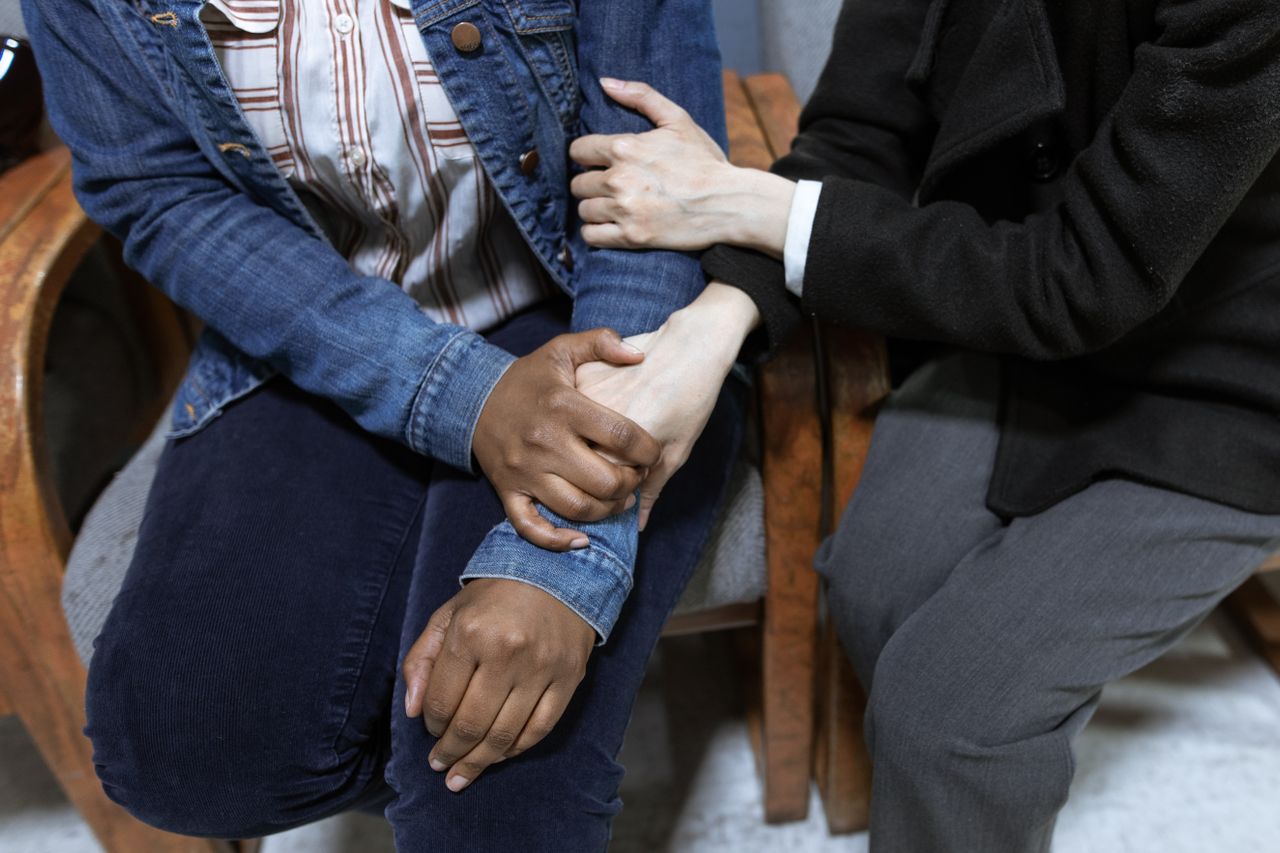
These scientific and philosophical observations trace a common theme: our minds, brains, and social bonds are at once the ground of moral feeling and the tools for understanding—and changing—how we act together.
Morality: mirrors, not mandates
Establishing rules and principles for morality is a huge subject at the heart of our social pact and goes far beyond any analysis of how the brain constructs moral judgments. Knowing which considerations make us more utilitarian can help people who want to behave more in that way, but neuroscientific insight cannot by itself justify one moral position over another. Instead, moral dilemmas and experiments function as mirrors: they reflect our reasons and our demons so we can bring them into awareness rather than letting them silently dictate our actions.
Trust, cooperation, and the cost of suspicion
There are many situations where trusting others and cooperating yields better outcomes. Distrust is costly not only in economic decisions but in social life as well—perhaps most clearly in couple relationships. Our selfish actions can harden into corrosive beliefs about others (“everyone is corrupt”), and ambiguity about others’ motives (“they may be corrupt”) pushes us toward selfishness and aggression. This creates a vicious circle that only breaks when we sow certainty and trust deliberately.
Oxytocin: biology of bonding and trust
Oxytocin plays a primary role in parenting behavior. Its name captures that role: from the Greek oxys (“quick”) and tokos (“birth”), it helps activate the uterus during childbirth and is released during nursing. More than preparing the body for motherhood, oxytocin prepares the mother’s character for the enormous social task ahead. When oxytocin is reduced, social neglect and a lack of trust often follow; supplying oxytocin tends to increase trust, empathy, emotional recognition, and understanding. Manipulating oxytocin receptors in animals produces strikingly altered social patterns, and atypical variations in those genes are linked with conditions that affect social behavior, such as autism. Biology, then, shapes the raw material of social life without dictating moral conclusions.
Neurology of cooperation and reward
When people make confident, cooperative, and altruistic choices in trust-based games, the brain’s dopaminergic reward circuits are activated. The brain responds to solidarity much as it does to other pleasures—sex, food, money. Being good has intrinsic value, which helps explain why decisions in economic games rarely focus exclusively on financial maximization while ignoring social considerations.
Shared genetic skeleton, individual variation
Noam Chomsky likened the common structure of language across cultures to a shared skeleton. The same holds for genetics: we share a human genome that makes common features possible. Yet our genes are not identical. Polymorphisms—genomic locations with high variation—contribute to individuality and help explain why people differ in temperament, sociality, and susceptibility to certain conditions.
Split minds, single bodies: the corpus callosum and narrative
The brain’s two hemispheres are connected by the corpus callosum, a dense bridge of neuronal fibers coordinating traffic between the two halves. Without these bridges, the cerebral hemispheres become effectively isolated. Epilepsy, in part a disorder of runaway connectivity, can be treated by surgically interrupting these flows; the result is dramatic but can stop epileptic cycles. In patients without a corpus callosum, each hemisphere can access only its own information, producing separate narratives enacted by the same body. The right hemisphere sees only the left visual field and controls the left side of the body, while the left hemisphere has its own privileged functions—language being a classic example of left-hemisphere specialization, and spatial representation often mapping to the right. Thus, when such patients see an object on the left, they may be able to draw it (right-hemisphere skill) but not name it (left-hemisphere task).
The interpreter: conscience and the made-up story
Because one hemisphere may lack access to another’s motives, the left hemisphere often reconstructs a plausible story to justify action whose original motive is hidden. The conscious mind therefore serves as both front man and interpreter, narrating explanations in hindsight for actions that may have arisen from processes outside immediate awareness.
Perception, delay, and the brain that lives in the past
To see how quickly—and how indirectly—perception becomes a brain state, consider subliminal images. Light hitting the retina becomes electrical and chemical activity that travels to the thalamus and then to primary visual cortex. About 170 milliseconds after retinal stimulation, activity appears in visual cortex: a delay due to conduction times and to the brain’s construction of a cerebral state that codifies the stimulus. When neuronal response intensity crosses a threshold, a second wave of activity follows roughly 300 milliseconds after the stimulus. This later wave spreads beyond primary sensory areas, like a wildfire across cortical regions. The brain, in effect, lives in the past: we are always working with representations formed after events occur.
Inferring minds, locked minds, and consciousness
We infer others’ mental states—happiness, desire, boredom, nostalgia—mainly from gestures and speech. Language lets us share private states: love, pain, memories. But when someone cannot externalize mental life—when they are sleeping or in a vegetative state—they appear locked in, and it was once reasonable to doubt their consciousness. That view has shifted. Consciousness has multiple neural signatures. Imagining playing tennis activates the supplementary motor area (SMA), which controls movement; imagining walking through a familiar route recruits the parahippocampus and parietal cortex. If a patient shows normal frontal and thalamic activity, intermediate coherence in brain signals, synchronous responses to stimuli that produce a massive wave about 300 milliseconds later, and trails of directed imagination and learning that require consciousness, it becomes very plausible that they possess consciousness. Still, no single test is definitive.
Practical implications: knowledge to guide choices
Taken together, these ideas suggest practical lessons for social life and ethics. Neuroscience shows that trust, cooperation, and empathy are rooted in biological systems that produce reward and bonding. At the same time, brain architecture creates limits: separate processes, delays in perception, and post-hoc narrative-making mean our introspections are imperfect guides to why we act. Moral philosophy must therefore coexist with empirical humility: neuroscientific facts can help us understand tendencies and design interventions—training, institutions, and practices that foster trust—but they do not settle which moral frameworks society should adopt.
Conclusion: science as self-knowledge
Understanding how brains build perception, emotion, and sociality gives us tools to know ourselves better without pretending to resolve moral disputes for us. The sciences of bonding, reward, and connectivity offer mirrors: they reveal the circuits that incline us toward cooperation, the genetic and neural differences that shape behavior, and the interpreter that narrates our deeds. Recognizing these features helps us intentionally cultivate trust, to interrupt vicious cycles of suspicion, and to align our social practices with the biological capacities that make cooperation rewarding. In short, neuroscience deepens our self-understanding; moral choice still depends on values we must name and defend.
Source : The Secret Life of the Mind: How Your Brain Thinks, Feels, and Decides by Mariano Sigman
Goodreads : https://www.goodreads.com/book/show/32498119-the-secret-life-of-the-mind
Buy on Amazon IN : https://link.amazon/B04oFZEPg
Buy on Amazon.com : https://amzn.to/44Ra6do
Read the Previous Article in the Series :




Leave a Reply