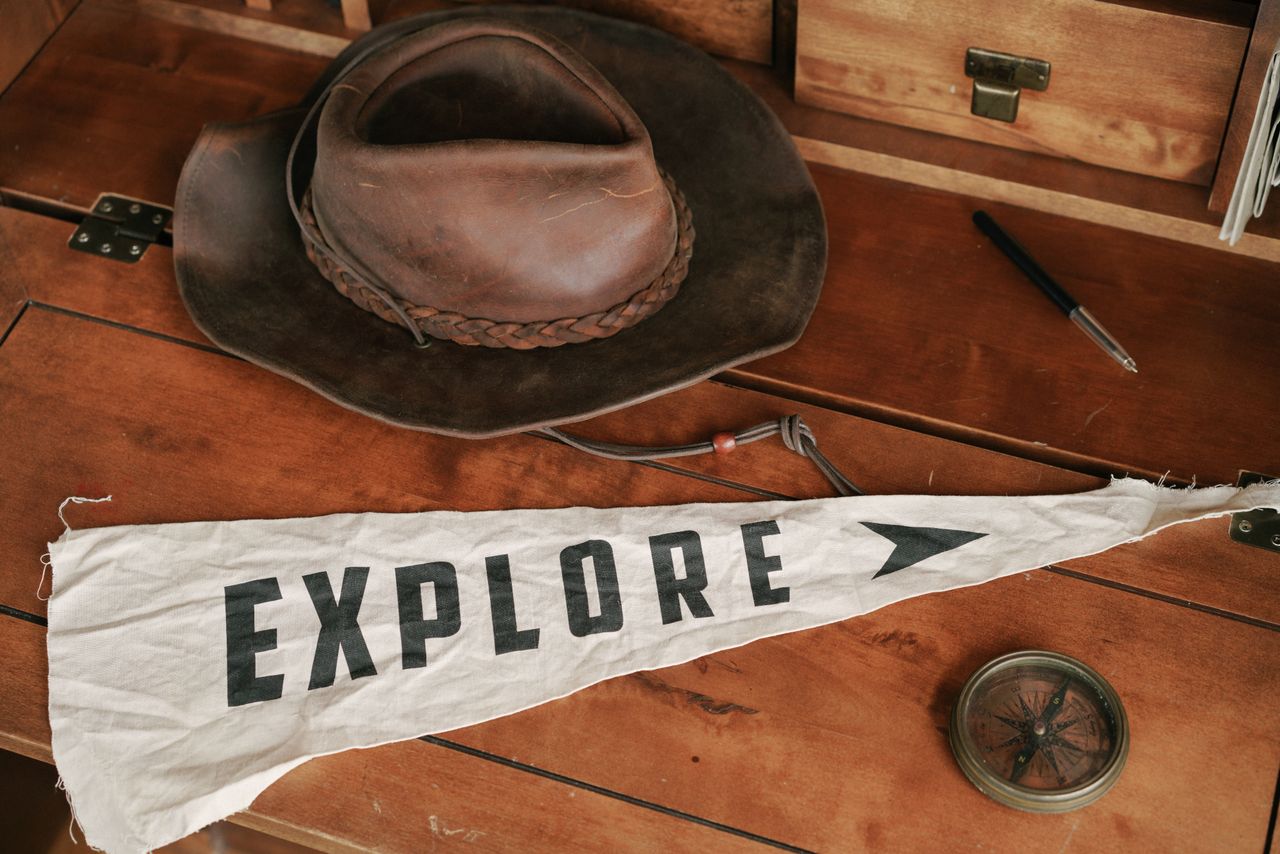
Not everyone who could leave does. When 1.5 million Scandinavians emigrated to the United States and elsewhere in the late nineteenth and early twentieth centuries, they were not a random cross-section of their home populations. Studies have found that emigrants tended to have less common first names than those who stayed behind — and unusual first names are a reliable proxy for individualistic streaks running through a family. The restless ones left. The collectivists stayed, and went on to build some of the strongest social welfare states in the world.
This is not coincidence. It is selection. And it raises a question that turns out to be far more complicated than it first appears: are some people simply wired to explore?
Reading Ancient Bones
Until recently, the story of human migration was pieced together from archaeology, linguistics, and limited genetic data. Then, in 2015, a research team led by Ron Pinhasi at University College Dublin discovered something that changed the field entirely.
The petrous bone — a dense, hard structure at the base of the skull that houses the hearing organs of the inner ear — is among the most durable bones in the human body. While other skeletal remains crumble to dust over millennia, the petrous bone often survives. More importantly, its density preserves DNA even in hot, humid environments where organic material normally breaks down rapidly. Grinding up the inner ear portion of ancient petrous bones yields roughly a hundred times more salvageable DNA than other bones.
This discovery opened a radically new window onto how human populations have moved across the planet over tens of thousands of years.
The key insight, according to Harvard geneticist David Reich, is striking in its simplicity: we have been on the move for most of human history. “Populations today almost never descend directly from the populations that existed in the same place even ten thousand years ago,” he says.
The original Out of Africa hypothesis imagined human populations spreading steadily outward from a common origin, like wine spreading from a spilled glass, until they covered the globe. The actual history has been far less orderly — populations moving back and forth within and across continents, mixing along the way, doubling back, dispersing again. Migration was not a single event. It was a permanent condition.
The Gene Behind the Restlessness
Within this context of perpetual movement, researchers have begun examining the genetic underpinnings of the urge to explore. One candidate stands out: a variant of the DRD4 gene, which is involved in dopamine signalling in the brain and associated with novelty-seeking behaviour.
The novelty-seeking version of DRD4 first appeared approximately forty-five thousand years ago — precisely the period when modern humans began their most dramatic expansion across the globe. That timing is, as researchers note, highly suggestive. It does not prove causation, but the correlation is difficult to dismiss.
Genetic evidence also supports the idea of gene surfing — a process in which certain genetic variants, by chance and through patterns of reproduction among those who have already migrated, become disproportionately common in populations that moved farthest from their origins. The explorers carried their genes with them, and those genes spread.
Nomads, Settlers, and the Context Problem
A 2008 study by anthropologist Dan Eisenberg tested the implications of DRD4 directly, using members of the Ariaal tribe in northern Kenya. The Ariaal are traditionally nomadic pastoralists, relying on herds of camels, cattle, and other animals for their livelihood. In recent decades, some have settled in villages and taken up agriculture, while others have maintained their nomadic way of life.
Eisenberg found that roughly a fifth of Ariaal men in both groups carried the novelty-seeking version of DRD4. But the effects of that gene diverged sharply depending on which group the men belonged to.
Among the nomads, men with the novelty-seeking variant were better nourished, with higher body-mass index and greater muscle mass. Among the settled villagers, the pattern reversed: novelty-seekers were less well nourished than their counterparts.
The explanation is intuitive once stated. Restless, exploratory personalities thrive in the constantly changing environment of nomadic life, where adaptability is an asset and every day brings new challenges. The same traits become liabilities in the repetitive routine of settled agriculture, where consistency and patience are rewarded and restlessness disrupts rather than advances.
This is the same argument used to explain why ADHD — also linked to the DRD4 gene — may have offered genuine evolutionary advantages among hunter-gatherer ancestors, even as it creates difficulties in the structured environment of modern schooling and office work.
Why No Single Version Won
If the novelty-seeking variant of DRD4 confers such clear advantages in the right environment, why did it not simply take over? Why do populations consistently maintain a mix of those who want to move and those who want to stay?
The answer lies in what geneticists call frequency-dependent selection. Some traits converge over generations toward an optimal value. Others have no single correct answer — their advantage or disadvantage depends entirely on what the people around you are doing.
Aggression is most useful when no one else is aggressive. Cooperation is most valuable in a community of cooperators. Extroversion may benefit a society precisely because introverts also exist within it. “There may not be one optimal personality,” as anthropologist Luke Matthews puts it. A society with a mix of personalities often outperforms one composed entirely of any single type.
The Ariaal findings confirm this logic. The novelty-seeking variant is advantageous in nomadic conditions; the more settled variant works better in agricultural ones. In any population navigating an uncertain world, you want some people pushing back the borders of the map — and others keeping the home fires burning. Neither role is superior. Both are necessary. Natural selection, it seems, understood this long before we did.
It Was Never Just One Gene
The idea of a single “explorer’s gene” is, in the end, too simple. DRD4 is part of the story, but complex behaviours — the kind that drove humans across land bridges and oceans, into deserts and frozen tundra — are never reducible to a single genetic variant. They emerge from a dense interaction of genetics, culture, accumulated knowledge, and circumstance.
What separates modern humans from archaic humans, or from other primates, is not one gene. It is a whole suite of cognitive and behavioural capacities that researchers call behavioural modernity, developed gradually and transmitted across generations. The boats and the navigation charts. The Gore-Tex and the GPS. “It’s biocultural,” as Matthews says. The biology created the urge. The culture created the means.
Forty-five thousand years ago, a genetic variant appeared in a human population that was beginning to walk to the ends of the earth. That variant is still here, distributed unevenly across billions of people — in the person who books a one-way ticket, in the child who wanders too far from camp, in anyone who has ever stood at a border and felt, inexplicably, that the interesting part was on the other side.
They were not being irrational. They were being exactly what their ancestors were built to be.
Source : The Explorer’s Gene: Why We Seek Big Challenges, New Flavors, and the Blank Spots on the Map by Alex Hutchinson
Goodreads : https://www.goodreads.com/book/show/215583308-the-explorer-s-gene
Buy on Amazon Com : https://amzn.to/3RcsV7P
Buy on Amazon IN : https://link.amazon/B0g5cHnSf
Read the Previous Article in the Series :




Leave a Reply