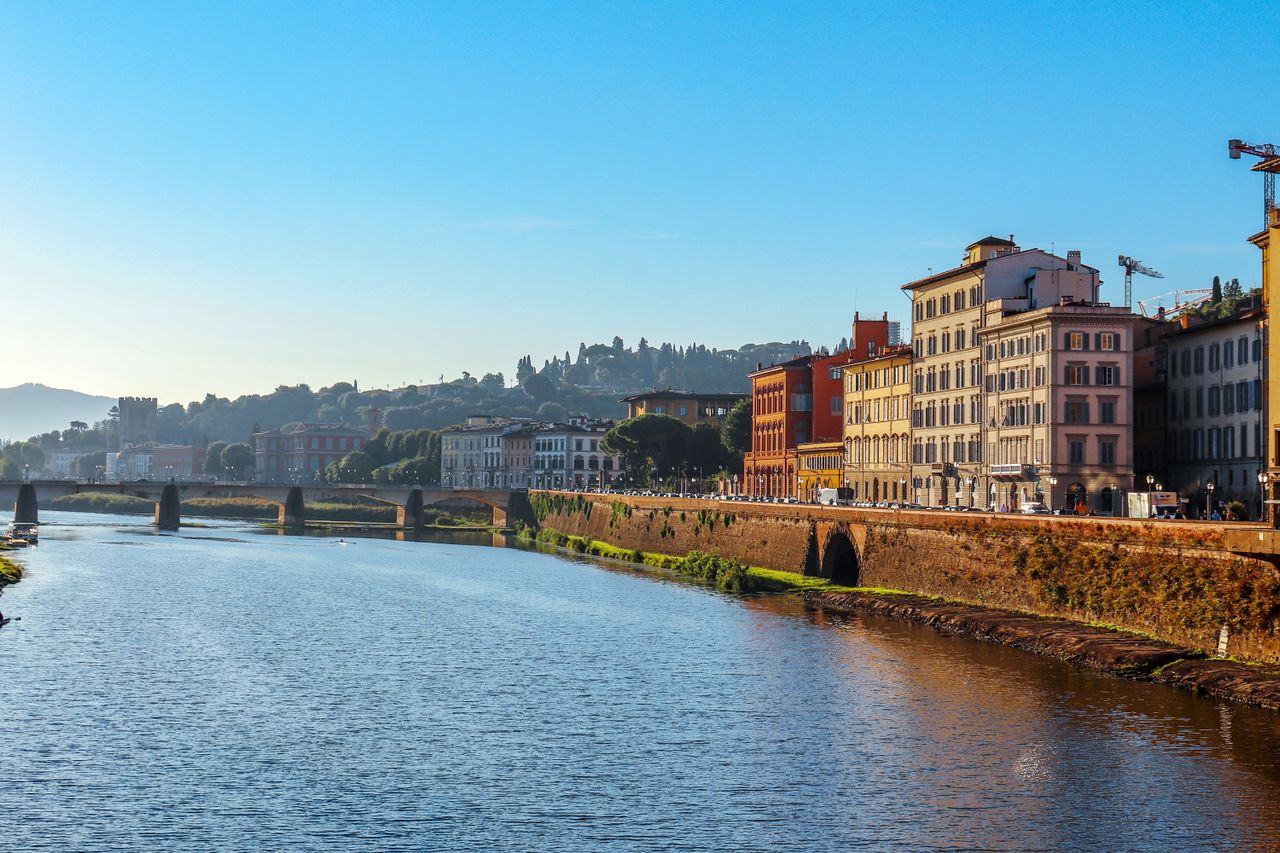
There is a dark irony at the heart of the Florentine miracle.
Much of it was made possible by catastrophe.
The Black Death killed more than half of Florence’s population. The established order was instantly disrupted. Social status was reshuffled overnight. Doors previously closed were suddenly open — because the person on the other side was dead. The plague produced one of the essential ingredients for a golden age: instability.
And it created something else: an inheritance effect. With the city’s wealth concentrated in fewer hands, merchants found themselves sitting on surplus capital with nowhere obvious to put it. Reluctant to invest in new ventures, they turned, for reasons historians still find mysterious, toward culture. Art and rare manuscripts became, as economic historian Robert Lopez put it, “the magic password which admitted a man or a nation to the elite group.” Culture became the safe bet.
The Church, meanwhile, had failed. It could not stop the plague, and its moral authority crumbled with it. The space it vacated was filled by the Humanists — secular, curious, hungry for ancient knowledge.
None of this would have happened without the Black Death.
This is not a comfortable idea. But history is full of it. The Athenian golden age followed the Persian sack of Athens. The Florentine Renaissance followed the plague. Destruction clears the ground. Instability cracks open what stability had sealed shut.
What Florence Was Really After
The Medicis were skilled traders — silk from China, spices from Africa, wealth flowing in from every direction. But what they prized above all else were the ancient manuscripts from Greece and Alexandria. Lost knowledge, recovered. Old ideas, made new.
Places of genius always welcome new information, new ideas. They do not protect their orthodoxies. They do not punish curiosity. Florence even lacked a university, which turned out to be an advantage — it saved the city from what urbanist Peter Hall called “a scholastic straitjacket.” Leonardo da Vinci was a poor student, barely literate in Latin well into middle age. He had little patience for conventional wisdom. As the psychologist Edwin Boring once said, centuries after Leonardo’s death: “It is useful to be ignorant of bad knowledge.”
Florence was ignorant of a great deal of bad knowledge. And the world is still living off what it built.
The Lesson We Keep Forgetting
Florence was not a utopia. It was competitive, ruthless, plague-ridden, politically turbulent, and financially volatile. It produced genius not despite these conditions but, in many ways, because of them.
What it did have — and what we struggle to replicate — was a culture that took beauty seriously. Not as decoration. Not as luxury. As necessity. As the thing worth spending on when you have nothing else to spare.
It had people who looked at the material world with wonder rather than contempt. Who saw no wall between making money and making something beautiful. Who bet on talent before talent had proven itself. Who lost contests and turned the loss into a dome.
We do not need to rebuild Florence. But we might ask ourselves, more often, what it would mean to live — and work — as if beauty were not an afterthought.
What would we build then?
Source : The Geography of Genius: A Search for the World’s Most Creative Places from Ancient Athens to Silicon Valley by Eric Weiner
Goodreads : https://www.goodreads.com/book/show/25111093-the-geography-of-genius
Get it on Amazon IN : https://link.amazon/B00GBY6Sn
Get it on Amazon Com : https://link.amazon/B00yVWczY
Read the Previous Article in the Series :





Leave a Reply