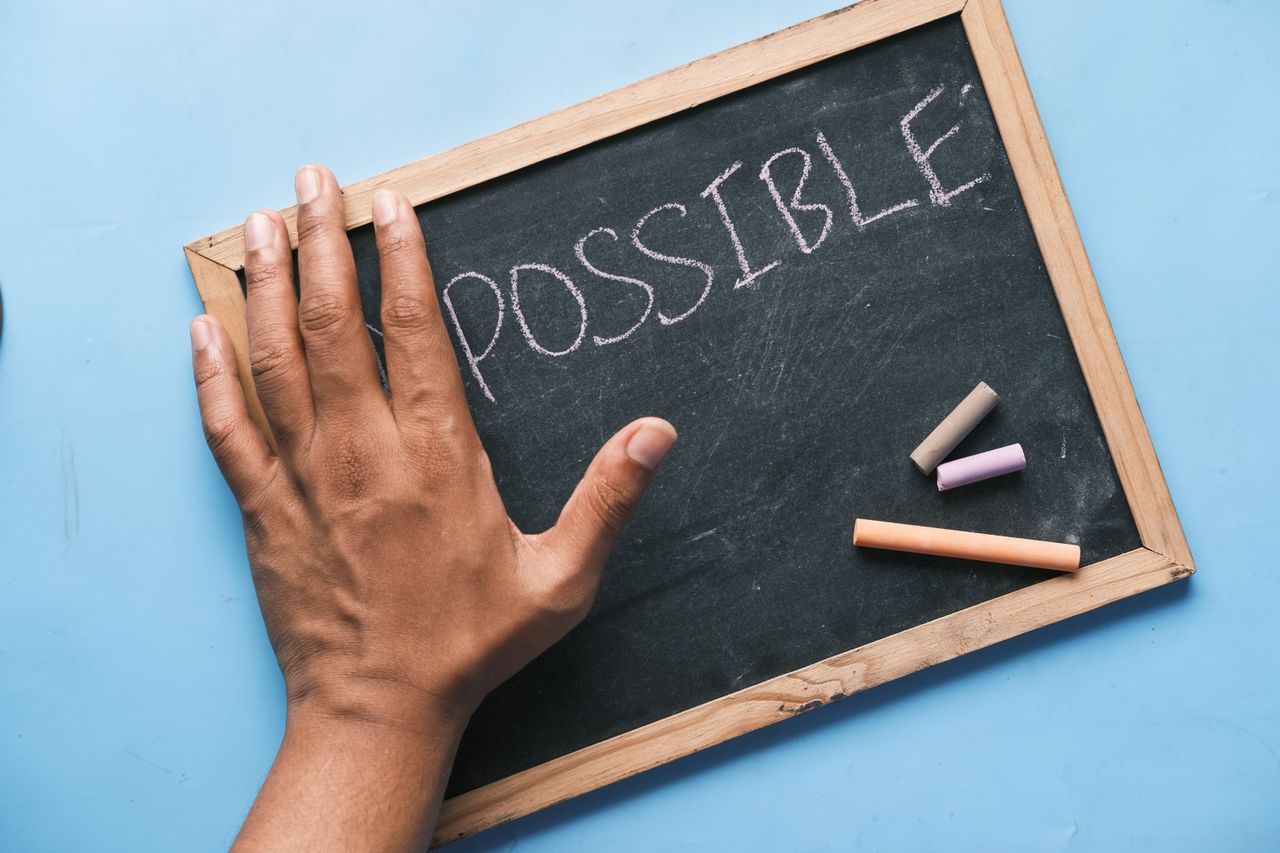
There’s a word that makes a lot of people uncomfortable: optimism.
Somewhere along the way, it got tangled up with delusion. With naivety. With being the kind of person who ignores reality and floats through life on a cloud of wishful thinking. And so a lot of smart, self-aware people quietly abandoned it — afraid that hoping for the best was just a setup for disappointment.
That fear is understandable. But it’s wrong.
Let’s Get the Definitions Straight
Optimism: hopefulness and confidence about the future or the success of something.
Delusion: a false belief held despite incontrovertible evidence to the contrary.
These are not the same thing. Not even close.
The actual opposite of optimism is pessimism — a tendency to see the worst aspect of things, a lack of hope or confidence in the future. And here’s the question worth sitting with: between those two orientations, which one gives you a better shot at getting where you want to go?
Hope and confidence in the future don’t guarantee outcomes. But they do increase the probability of reaching them. More importantly, your perspective is something you have genuine control over — unlike the trillion unpredictable variables that make life so complicated to navigate.
Choosing optimism, when you look at it clearly, is just practical.
What Optimism Actually Looks Like
It doesn’t mean lying to yourself. It doesn’t mean pretending the risks aren’t real or that the road ahead is easy.
If you want to run your own business, optimism doesn’t require believing it’ll be smooth. It won’t be. The honest version is this: it’s going to be hard, and you should try anyway. Your grandfather couldn’t build something on the side with a smartphone in his pocket. That opportunity alone is worth something. Gratitude, when you actually feel it, becomes fuel.
Optimism is being genuinely excited about your next at-bat — while knowing you’re not guaranteed to hit a home run.
Think of it as a map. It doesn’t flatten the terrain. It just shows you where you’re headed, so the journey itself becomes worth something. When the destination matters to you, the process stops feeling like a grind and starts feeling like a game you actually want to play.
That’s the shift. Optimism makes playing the game more enjoyable than winning it.
The Real Test: What Do You Do When Things Go Wrong?
When something falls apart, what’s your default?
Do you blame others? Do you lean on ego as a shield? Do you retreat into yourself and replay what went wrong on a loop? Does your self-worth hinge entirely on what other people think of you in that moment?
Or do you take accountability? Do you have perspective — life as a whole, outside the immediate setback? Are you actually kind to yourself when you fail?
Optimism doesn’t survive on its own. It needs other emotional ingredients to hold it up — accountability, self-compassion, gratitude, perspective. When you build those, losses don’t cut as deep. And when you’re not constantly terrified of being let down, optimism stops feeling dangerous. It starts feeling natural.
Rewiring your emotional defaults takes time. A reasonable starting point: surround yourself with people who are optimistic, and deliberately limit the time you spend with people who pull you down. Fill your inputs — podcasts, videos, conversations — with positivity. Not toxic positivity. Just the genuine kind.
Kindness Is Not Weakness
There’s another quality that often gets misread, in the same way optimism does: kindness.
Most people think of kindness as something you offer when you’ve hurt someone — a repair mechanism. But the more demanding and useful form of it is being kind to people who have put you in a difficult position.
That’s where it gets hard. An associate who was rude to you, who let you down, who disappeared and resurfaced two years later acting like nothing happened — the instinct is to match the energy. The more powerful move is to stay kind anyway.
This isn’t about being a pushover. You can be kind, candid, and hold your ground simultaneously. Kindness, in a confrontation, creates a kind of opening that nothing else can — it gives the other person room to be honest with you in a way they wouldn’t otherwise allow themselves to be.
It also changes how difficult conversations land. Think about why you choose one doctor over another — it’s rarely just expertise. Bedside manner matters. The same medicine, delivered with warmth, is easier to receive. The shot still happens. The diagnosis doesn’t change. But the experience of it does.
The Risk of Kindness Without Candor
There’s a real danger in being kind without being honest: resentment.
If you absorb everything, swallow difficult truths to protect other people’s feelings, and never deliver the candid version of what you actually think — you’ll be fine for a while. And then, eventually, you won’t be. The kindness tips into quiet frustration, and then into something uglier.
The goal is kind candor — the ability to deliver honest, sometimes hard messages with genuine care for the person receiving them. It’s harder than either kindness or candor alone. But it’s the version that holds up over time.
The Bottom Line
Optimism isn’t about pretending life is easy. It’s about choosing to believe you’re capable of navigating it — whatever it throws at you.
That belief doesn’t have to be loud or performed. It just has to be real enough to get you out of bed in the morning, excited to play the game. Whether the goal is building a business, making something meaningful, or just showing up with more intention — optimism is the thing that makes the journey worth it, independent of the outcome.
What you’re not comfortable with is not trying.
That’s the whole argument.
Source : Twelve and a Half: Leveraging the Emotional Ingredients Necessary for Business Success by Gary Vaynerchuk
Goodreads : https://www.goodreads.com/book/show/55867729-twelve-and-a-half
Get it on Amazon In : https://link.amazon/B04IuOY45
Get it on Amazon Com : https://link.amazon/B0f5CCnoX
Read the Previous Article in the Series :




Leave a Reply