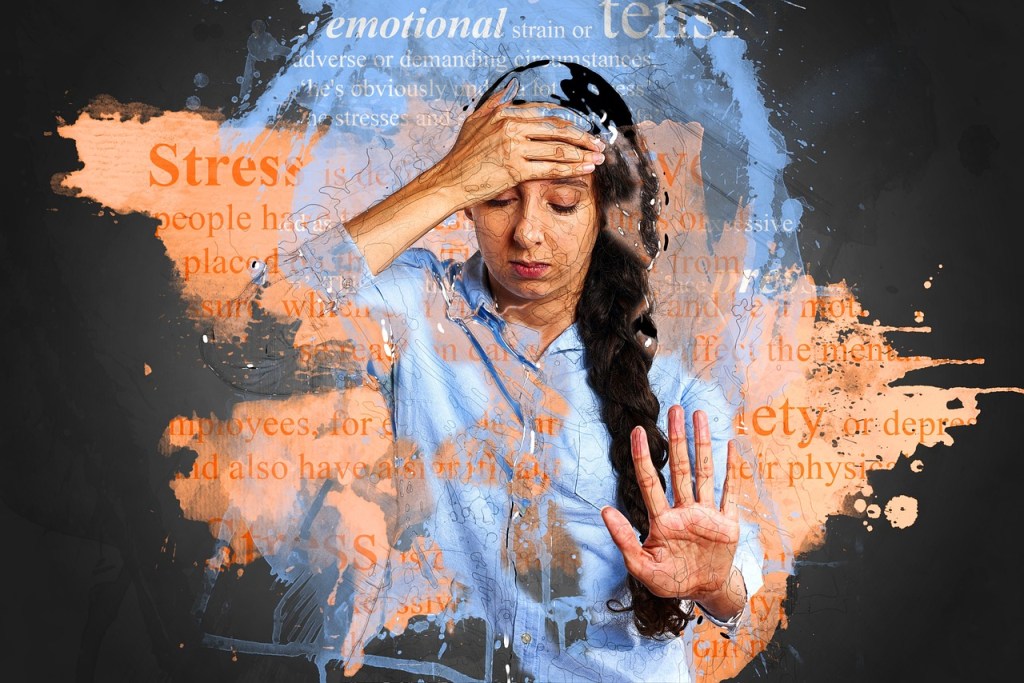
The experience of stress has three components. The first is the event, physical or emotional, that the organism interprets as threatening. This is the stress stimulus, also called the stressor. The second element is the processing system that experiences and interprets the meaning of the stressor. In the case of human beings, this processing system is the nervous system, in particular the brain. The final constituent is the stress response, which consists of the various physiological and behavioral adjustments made as a reaction to a perceived threat.
We see immediately that the definition of a stressor depends on the processing system that assigns meaning to it. The shock of an earthquake is a direct threat to many organisms, though not to a bacterium. The loss of a job is more acutely stressful to a salaried employee whose family lives month to month than to an executive who receives a golden handshake.
Equally important is the personality and current psychological state of the individual on whom the stressor is acting. The executive whose financial security is assured when he is terminated may still experience severe stress if his self-esteem and sense of purpose were completely bound up with his position in the company, compared with a colleague who finds greater value in family, social interests or spiritual pursuits.
The loss of employment will be perceived as a major threat by one, while the other may see it as an opportunity. There is no uniform and universal relationship between a stressor and the stress response. Each stress event is singular and is experienced in the present, but it also has its resonance from the past. The intensity of the stress experience and its long-term consequences depend on many factors unique to each individual. What defines stress for each of us is a matter of personal disposition and, even more, of personal history.
Selye discovered that the biology of stress predominantly affected three types of tissues or organs in the body: in the hormonal system, visible changes occurred in the adrenal glands; in the immune system, stress affected the spleen, the thymus and the lymph glands; and the intestinal lining of the digestive system.
There are many hormones in the body, soluble chemicals that affect the functioning of organs, tissues and cells. When a chemical is secreted into the circulation by one organ to influence the functioning of another, it is called an endocrine hormone. On the perception of a threat, the hypothalamus in the brain stem releases corticotropin-releasing hormone (CRH), which travels a short distance to the pituitary, a small endocrine gland embedded in the bones at the base of the skull. Stimulated by CRH, the pituitary releases adrenocorticotropic hormone (ACTH).
ACTH is in turn carried by the blood to the adrenals, small organs hidden in the fatty tissue on top of the kidneys. Here ACTH acts on the adrenal cortex, a thin rind of tissue that itself functions as an endocrine gland. Stimulated by ACTH, this gland now secretes the cor-ticoid hormones (corticoid, from “cortex”), the chief among them being cortisol. Cortisol acts on almost every tissue in the body one way or another from the brain to the immune system, from the bones to the intestines, It is an important part of the infinitely intricate system of physiological checks and balances by which the body mounts a response to threat. The immediate effects of cortisol are to dampen the stress reaction, decreasing immune activity to keep it within safe bounds.
The functional nexus formed by hypothalamus, pituitary and adrenal glands is referred to as the HPA axis. The HPA axis is the hub of the body’s stress mechanism. It is implicated in many of the chronic conditions we will explore in later chapters. Because the hypothalamus is in two-way communication with the brain centres that process emotions, it is through the HPA axis that emotions exert their most direct effects on the immune system and on other organs.
Many people who are prescribed cortisol-type drugs in treatment for, say, asthma, colitis, arthritis or cancer are at risk for intestinal bleeding and may need to take other medications to protect the gut lining. This cortisol effect also helps to explain why chronic stress leaves us more susceptible to developing intestinal ulcers.
Cortisol also has powerful bone-thinning actions. Depressed people secrete high levels of cortisol, which is why stressed and depressed postmenopausal women are more likely to develop osteoporosis and hip fractures.
We need to mount a stress response in order to preserve internal stability. The stress response is non-specific. It may be triggered in teac-tion to any attack–physical, biological, chemical or psychological–or in response to any perception of attack or threat, conscious or unconscious. The essence of threat is a destabilization of the body’s homeostasis, the relatively narrow range of physiological conditions within which the organism can survive and function. To facilitate fight or escape, blood needs to be diverted from the internal organs to the muscles, and the heart needs to pump faster. The brain needs to focus on the threat, forgetting about hunger or sexual drive. Stored energy supplies need to be mobilized, in the form of sugar molecules. The immune cells must be activated. Adrenaline, cortisol and the other stress substances fulfill those tasks.
The stress response may be understood not only as the body’s reaction to threat but also as its attempt to maintain homeostasis in the face of threat.
Source : When the Body Says No: The Cost of Hidden Stress by Gabor Maté
Goodreads : https://www.goodreads.com/book/show/450534.When_the_Body_Says_No
Read Previous Article : https://thinkingbeyondscience.in/2024/11/23/the-body-mind-and-stress-understanding-the-interconnectedness-of-health/
Read Next Article : https://thinkingbeyondscience.in/2025/06/10/the-link-between-stress-and-cancer-insights-from-psychoneuroimmunology/








 Thinking Beyond Science
Leave a comment